Expert Guide on How to Invest in a Water Refill Station Business in Kenya and Make Good Return on Investment
What is the exact primary focus of this technical document?
This article serves as an expert guide on how to invest in a water refill station business in Kenya and make good return on investment.
Introduction
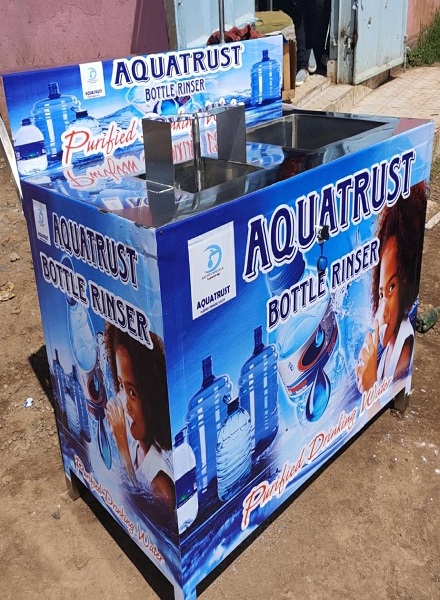 The demand for clean drinking water across Kenyan urban centres has reached unprecedented levels. Rapid demographic shifts and rising health awareness have transformed safe water from a basic utility into a premium commodity. This transformation presents a highly predictable commercial opportunity for strategic investors seeking consistent daily cash flow.
This comprehensive blueprint provides an expert guide on how to invest in a water refill station business in Kenya and make good return on investment. We examine the technical architectures, capital requirements, regulatory frameworks, and operational strategies necessary to establish a highly profitable venture. By deploying the correct infrastructure, your enterprise can achieve rapid market penetration and sustainable long-term profitability.
Expert Guide on How to Invest in a Water Refill Station Business in Kenya and Make Good Return on Investment
Market Dynamics Driving Water Vending in Kenya
The commercial viability of the water purification sector is underpinned by structural deficits in municipal infrastructure. Most rapidly growing estates experience persistent supply deficits and water quality fluctuations. Consequently, consumers are actively shifting away from expensive single-use plastic bottles toward more sustainable, affordable refilling alternatives.
[Municipal Supply Deficits] + [High Cost of Bottled Water]│
▼
┌─────────────────────────────────────────┐
│ Demand for Localised Water Refinement │
└─────────────────────────────────────────┘
│
▼
┌─────────────────────────────────────────┐
│ Consistent Daily Retail Transactional │
│ Cash Flow │
└─────────────────────────────────────────┘
Consumer economics further accelerate this market shift. Purified refill water costs up to seventy per cent less than traditional factory-branded packaged water. This significant price differential ensures sustained demand across all socio-economic demographics, rendering the business highly resilient against macroeconomic inflation.
Technical Specifications: Water ATMs vs. Refilling Stations
The Automated Water ATM Architecture
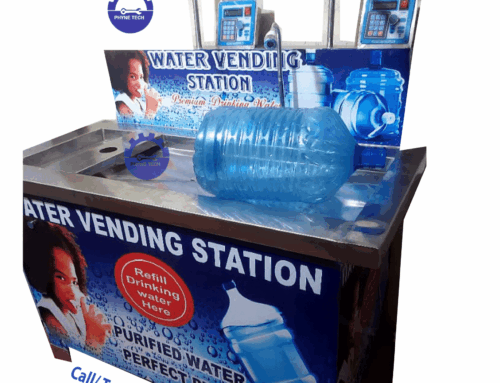
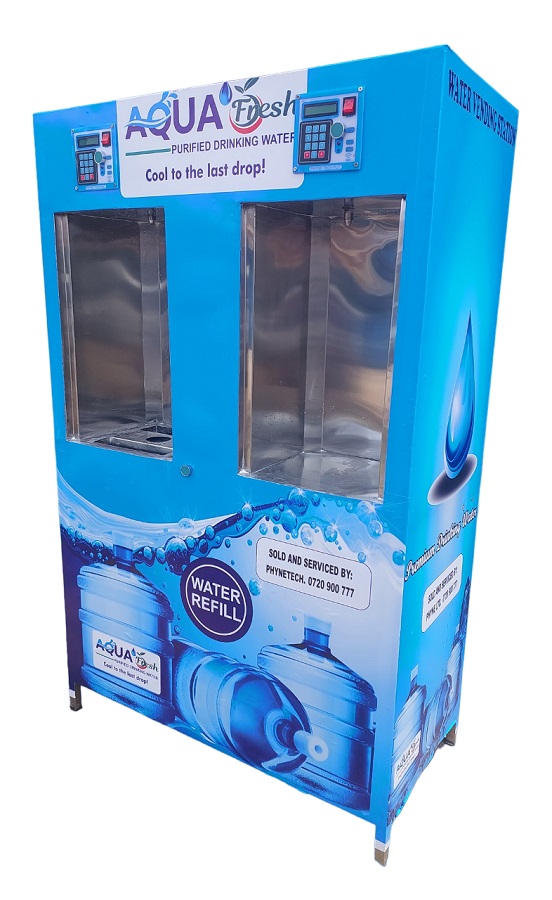
An automated water ATM is a self-contained, computerized vending machine engineered for high-efficiency retail dispensing. These systems incorporate advanced Programmable Logic Controllers to manage precise volumetric delivery based on financial inputs. They feature integrated multi-tap configurations, automated container rinsing mechanisms, and integrated digital payment modules.
The Standard Water Refilling Station Layout
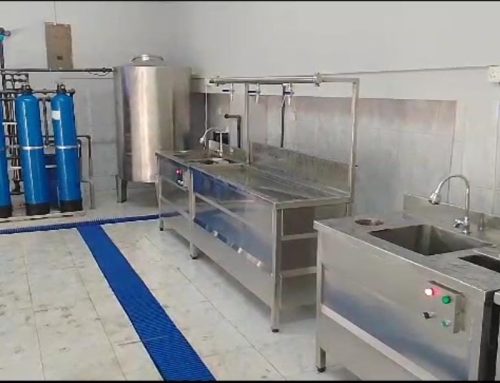
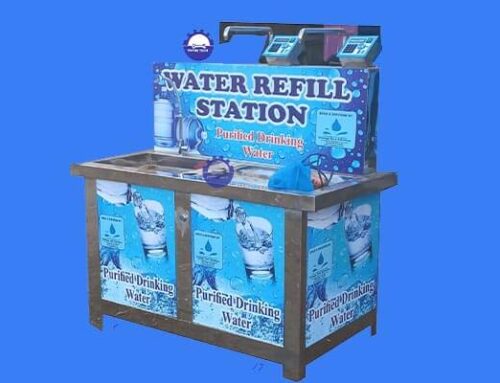
A standard refilling station operates as a localized treatment facility with a manual or semi-automated dispensing interface. This configuration utilizes larger footprint designs, external multi-stage filtration racks, and expanded bulk storage capacities. It is highly optimized for servicing high-volume commercial clients, walk-in estate consumers, and bulk container distributors.
Equipment Selection Matrix
| Technical Feature | Automated Water ATM | Standard Refilling Station |
| Primary Dispensing Mode | Automated PLC Controller | Manual Valve / Semi-Automated |
| Payment Integration | M-Pesa API & Coin Validators | Cashier Managed / Mobile Money |
| Space Requirement | Minimal (15 to 30 Square Feet) | Moderate (100 to 250 Square Feet) |
| Ideal Operational Environment | Supermarkets, Estate Walkways | Dedicated Retail Shops, Commercial Hubs |
| Peak Delivery Capacity | 500 to 2,000 Litres Per Hour | 1,000 to 10,000 Litres Per Hour |
The Water Purification Process Chain
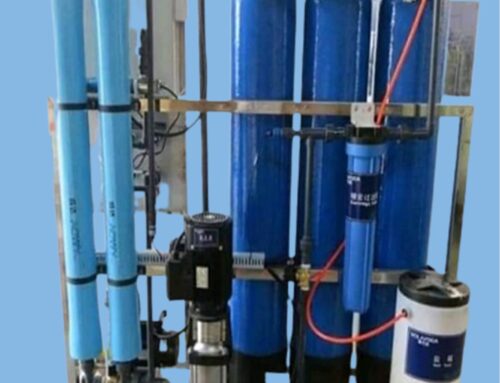
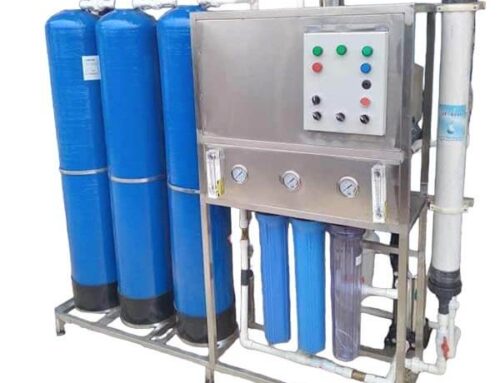
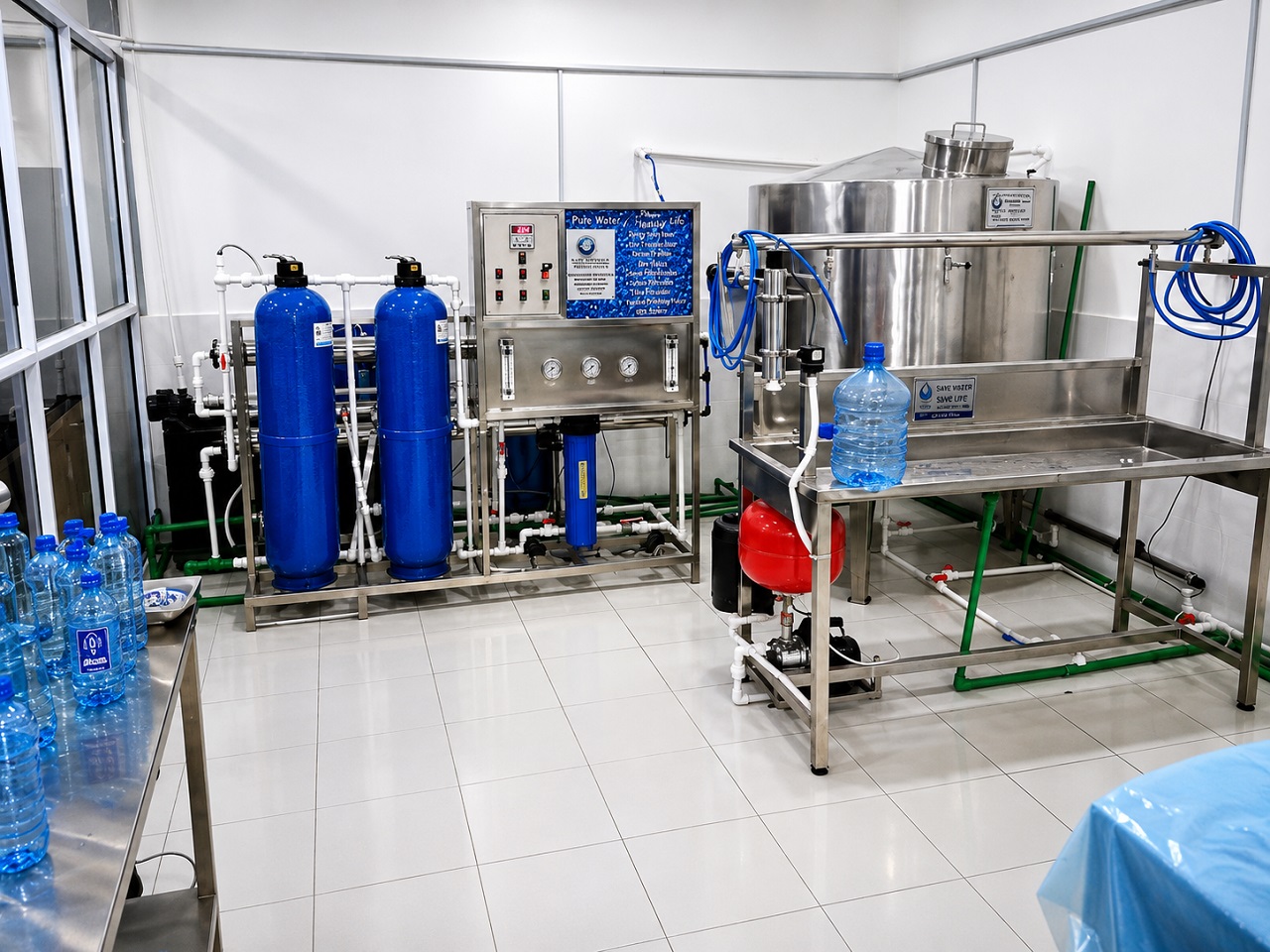
Achieving absolute compliance with local quality standards requires a multi-stage industrial treatment train. The process begins with raw water pre-filtration to eliminate suspended solids and particulate matter. This phase utilizes sand media filters and activated carbon blocks to remove turbidity, chlorine, organic compounds, and unpleasant odours.
┌─────────────────┐ ┌─────────────────┐ ┌─────────────────┐
│ Raw Water In │ ───> │ Sand & Carbon │ ───> │ Reverse Osmosis │
│ (Borehole/Tap) │ │ Pre-Filtration │ │ Deionisation │
└─────────────────┘ └─────────────────┘ └─────────────────┘
│
▼
┌─────────────────┐ ┌─────────────────┐ ┌─────────────────┐
│ Retail Water │ <─── │ Ultra-Violet & │ <─── │ Pure Water Tank │
│ Dispensing ATM │ │ Ozone Finished │ │ (Food-Grade SS) │
└─────────────────┘ └─────────────────┘ └─────────────────┘
The core refinement phase relies on advanced Reverse Osmosis technology. High-pressure pumps force water through semi-permeable membranes to eliminate heavy metals, dissolved salts, and fluoride fractions. The final stage involves intense Ultra-Violet sterilization and ozone dosing to destroy microbiological contaminants and ensure prolonged product shelf-life.
Regulatory Compliance and Licensing Framework
 Operating a commercial water purification plant in Kenya requires strict adherence to multiple statutory frameworks. Because water is legally classified as a food product, unauthorized processing attracts severe legal penalties. Investors must prioritize acquiring all valid regulatory clearances before initiating public retail operations.
- County Government Business Permit: Grants local authorization to operate a commercial retail outlet within the specific county jurisdiction.
- Public Health Medical Certificates: Mandates rigorous hygienic inspection of the retail premises and requires personal health clearances for all operators.
- Kenya Bureau of Standards Certification: Requires strict product testing against standard KS EAS 12 to certify bottled water safety.
- Water Services Regulatory Board Approvals: Ensures legal compliance regarding commercial water abstraction, supply linkages, and systemic resource utilization.
- National Environment Management Authority Clearance: Evaluates the ecological impacts of your purification wastewater reject stream management protocols.
Financial Architecture: An Expert Guide on How to Invest in a Water Refill Station Business in Kenya and Make Good Return on Investment
Initial Capital Allocation Models
The capital required to launch an operational purification node depends entirely on system capacity and source water chemistry. Borehole water sources typically require more robust reverse osmosis configurations than standard municipal connections. We have compiled a realistic expenditure framework reflecting current market costs.
| Asset Classification | Essential Starter Configuration (KES) | Advanced High-Volume Node (KES) |
| Purification Plant & Reverse Osmosis | 450,000 | 1,200,000 |
| Structured Automated Water ATM Unit | 180,000 | 350,000 |
| Food-Grade Stainless Steel Storage | 60,000 | 150,000 |
| Structural Civil Works & Branding | 50,000 | 120,000 |
| Statutory Licenses & Product Testing | 40,000 | 90,000 |
| Operational Electrical & Plumbing | 30,000 | 70,000 |
| Total Capital Investment Required | 810,000 | 1,980,000 |
Projected Operational Monthly Cash Flow Analysis
Evaluating ongoing operational expenses is vital for protecting profit margins. Your primary recurring expenditures will include electrical power consumption, raw water sourcing, replacement filtration consumables, and municipal lease rents. Automated systems significantly lower labor costs by eliminating the need for continuous manual supervision.
[Gross Monthly Revenue]│
├─── Minus: Raw Water Costs
├─── Minus: Power Consumption
├─── Minus: Consumable Filters
└─── Minus: Retail Rent & Labour
│
▼
[Net Monthly Cash Surplus] ──> (Target: 40% to 65% Margin)Strategic Profitability and Return on Investment Models
Model A: High-Density Suburban Retail Node
 This model operates in high-density residential zones, selling purified water primarily to walk-in clients with reusable containers.
- Average Daily Retail Volume: 1,500 Litres
- Retail Pricing Structure: KES 7 Per Litre
- Gross Daily Revenue generation: KES 10,500
- Estimated Monthly Gross Revenue: KES 315,000
- Total Monthly Operational Expenses: KES 110,000
- Net Monthly Profit Yield: KES 205,000
- Estimated Payback Period: 5 to 8 Months
Model B: Commercial Bulk Distribution Centre
This model focuses on supplying twenty-litre corporate water dispensers, local schools, gymnasiums, and real estate offices.
- Average Daily Distribution Volume: 4,000 Litres
- Bulk Pricing Structure: KES 5 Per Litre
- Gross Daily Revenue Generation: KES 20,000
- Estimated Monthly Gross Revenue: KES 600,000
- Total Monthly Operational Expenses: KES 220,000
- Net Monthly Profit Yield: KES 380,000
- Estimated Payback Period: 4 to 6 Months
Mitigating Risk and Operational Pitfalls
- Managing Raw Water Source Variability
Fluctuations in source water mineralization can severely impact purification systems. High levels of iron or calcium cause rapid membrane fouling and premature pump failures. We advise conducting complete laboratory water assays before purchasing any specific filtration setup. - Eliminating Quality Control Failures
Inconsistent water quality completely undermines consumer trust and can attract heavy regulatory fines. Preventative maintenance schedules must be followed precisely without exception. Operators should use digital Total Dissolved Solids meters daily to monitor purification efficiency in real-time.
Scaling Your Infrastructure: An Expert Guide on How to Invest in a Water Refill Station Business in Kenya and Make Good Return on Investment
Developing Multi-Site Hub Networks
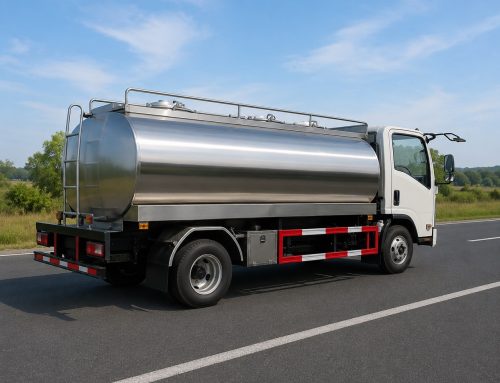
True commercial scaling involves moving from a single retail shop to a distributed network of automated water ATMs. Investors can position small, automated dispensing cabinets inside existing supermarkets, estate grocery shops, and fuel stations. Centralized purification plants can efficiently distribute bulk purified water to these remote nodes daily.
┌────────────────────────┐
│ Central Purification │
│ Hub Plant │
└────────────────────────┘
│
┌────────────────────────┼────────────────────────┐
▼ ▼ ▼
┌─────────────────┐ ┌─────────────────┐ ┌─────────────────┐
│ Satellite ATM │ │ Satellite ATM │ │ Satellite ATM │
│ Outlets: Estate │ │ Outlets: Super │ │ Outlets: Fuel │
│ Mini-Marts │ │ Markets │ │ Stations │
└─────────────────┘ └─────────────────┘ └─────────────────┘
Institutional B2B Contract Acquisition
Unlocking institutional distribution contracts provides predictable, high-volume revenue streams. Target corporate office complexes, medical clinics, hospitality providers, and construction sites with tailored delivery packages. Offering reliable delivery schedules and flexible digital invoicing helps secure long-term commercial relationships.
The Phynetech Advantage: Engineering Excellence
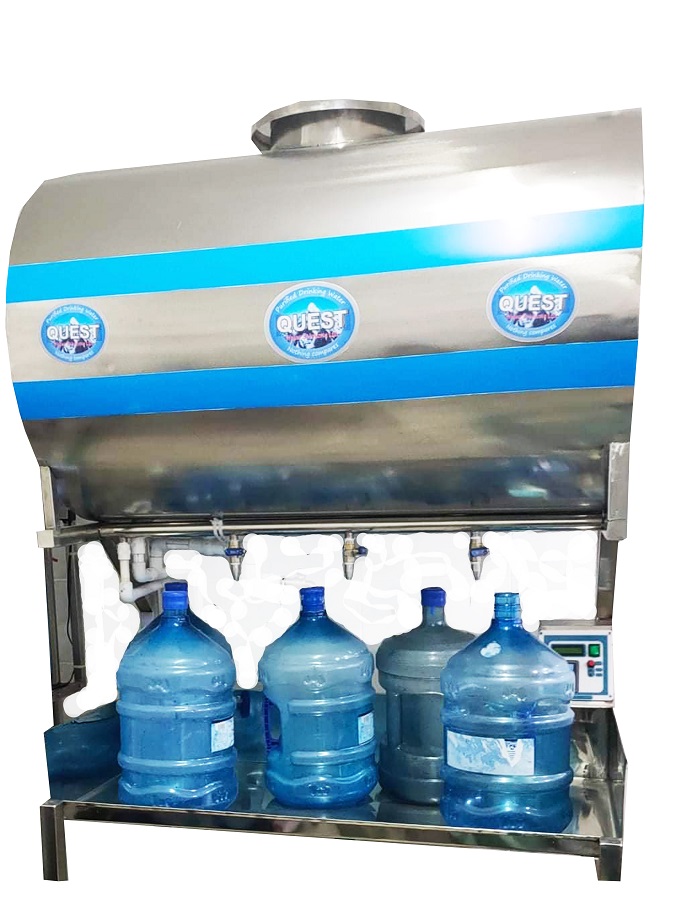 Partnering with Phynetech guarantees access to industry-leading water refinement machinery and engineering expertise across East Africa. Our systems feature high-grade components engineered to handle complex regional water profiles reliably. We help investors eliminate guesswork by providing complete support from initial water testing through full regulatory licensing.
Every Phynetech system comes with a comprehensive one-year structural warranty and access to our dedicated technical support team. We handle all logistics, specialized on-site plumbing, and system calibration to ensure immediate operational efficiency. Choosing our hardware gives your business a durable foundation built for long-term commercial success.
Summary of Strategic Takeaways
Investing in a water purification business provides a proven, recession-resistant path to financial independence. Success requires matching high-traffic locations with robust filtration technology and strict regulatory compliance. By maintaining excellent water purity and using automated payment systems, you can build a highly profitable enterprise.
Contact to Purchase Your Machines
Ready to launch your water purification business? Visit our production and assembly facility for live equipment demonstrations and customized investment consultations.
- Physical Headquarters: Ruiru Exit 11, Directly After Eastern Bypass, Before Shell Petrol Station Kihunguro, Thika Superhighway.
- Direct Telephone Contacts: +254 720 900 777 | +254 717 777 112
- Official Communications Email: phynetech@gmail.com
Frequently Asked Questions
- How much space do I need to launch a standard automated water ATM?
Automated cabinet water ATMs are highly space-efficient, requiring only fifteen to thirty square feet when integrated into an existing retail shop front. - Can a water refilling station process highly saline borehole water safely?
Modern reverse osmosis systems can remove up to ninety-nine per cent of dissolved mineral salts, turning brackish water into premium drinking water. - What is the average lifespan of industrial reverse osmosis membranes?
With proper pre-treatment and regular backwashing, industrial reverse osmosis membranes operate efficiently for twelve to twenty-four months before needing replacement. - How long does the complete Kenya Bureau of Standards certification process take?
The full certification process typically takes four to eight weeks, including laboratory sample analysis and physical inspections of the facility. - What digital payment systems work best with automated water ATMs?
We integrate direct mobile money APIs like M-Pesa along with physical coin validators to allow secure, cashless transactions.
References:
- Kenya Bureau of Standards (KEBS), 2025. KS EAS 12: Packaged Drinking Water Specification Standard. Ministry of Industrialization, Trade and Enterprise Development. Government of Kenya. Available at: National Library of Medicine / PMC Resource Portal
- Water Services Regulatory Board (WASREB), 2025. Urban Water Supply and Commercial Licensing Guidelines. Ministry of Water, Sanitation and Irrigation. Government of Kenya. Available at: World Bank Documents & Reports Library
- National Environment Management Authority (NEMA), 2024. Environmental Management and Co-ordination (Water Quality) Regulations. Government Printer, Nairobi. Available at: Official NEMA Portal Legal Repository
- World Health Organization, 2023. Guidelines for Drinking-water Quality: Fourth Edition. WHO Guidelines Approved by the Guidelines Review Committee. Available at: WHO Institutional Repository for Information Shares (IRIS)

Discussion
Testimonials
"Talk of quality products Phynetech limited got u covered.Thanks for always being the best and not forgetting the customer service"
Becky Gichimu
Related Post
For more related Blog posts from Phynetech Limited Kenya