Phynetech Reverse Osmosis System For Water With Low Salinity Levels
TL;DR Short Answer:
A Phynetech reverse osmosis system for water with low salinity levels is a water purification system specifically engineered for water sources with Total Dissolved Solids (TDS) between 100 and 300 parts per million (ppm). It combines multi-stage filtration—including sand media, activated carbon, micron cartridge filtration, reverse osmosis membrane separation, and ultraviolet (UV) disinfection—to produce high-purity water for commercial, institutional, and industrial applications.
Introduction to the Phynetech Reverse Osmosis System for Water with Low Salinity Levels
If you have come across the term “low hardness-low saline reverse osmosis machine” and wondered what it means—and whether it is the right solution for your water treatment needs—this guide is for you.
This article explains exactly what this type of reverse osmosis (RO) system is, how it differs from generic RO machines, and why the “low hardness-low saline” specification matters. Whether you are a business owner, property manager, or entrepreneur exploring water purification options in Kenya, understanding this technology is the first step toward making an informed investment.
What Does “Low Hardness-Low Saline” Mean?
The term describes the target water quality the system is designed to treat.
- Low hardness refers to water with relatively low concentrations of calcium and magnesium minerals—typically found in highland boreholes and municipal supplies.
- Low saline refers to water with low salt content, measured as Total Dissolved Solids (TDS).
This machine is specifically optimized for water with TDS between 100 ppm and 300 ppm. Water in this range is often “nearly safe” but still contains subtle impurities—metallic tastes, microscopic pathogens, and lingering chemical residues—that standard filters miss.
Why TDS Matters
TDS measures the total concentration of dissolved substances in water, including minerals, salts, and organic matter. Water with TDS below 100 ppm is typically soft and requires minimal treatment. Water above 300 ppm begins to enter the brackish range, requiring a more robust (and expensive) RO system.
The low hardness-low saline RO machine sits in the sweet spot: it delivers high-purity output without the unnecessary cost and energy consumption of systems designed for much harder or more saline water.

How Does This Machine Work?
The system uses a comprehensive multi-stage treatment process to progressively purify water:
| Stage | Filtration Method | What It Removes |
| 1 | Quartz and sand media filtration | Sediment, suspended solids, large particles |
| 2 | Activated carbon filtration | Chlorine, odors, chemical residues |
| 3 | Micron cartridge filtration | Fine particles that could damage the RO membrane |
| 4 | Reverse Osmosis membrane | Dissolved solids, salts, up to 99% of impurities |
| 5 | UV disinfection | Bacteria, viruses, and other pathogens |
Additionally, the system may include optional chemical pre-treatment—chlorine dosing, antiscalant injection, and pH adjustment—to protect the membrane and extend its lifespan.
This logical sequence ensures that water reaching the sensitive RO membrane is already significantly pre-cleaned, reducing maintenance costs and preventing premature membrane fouling.
Key Components of the Phynetech Reverse Osmosis System for Water with Low Salinity Levels
- Pre-Filtration (Quartz & Sand Media)
The first line of defense removes large particles and sediment. This protects downstream components from clogging and damage. - Activated Carbon Filter
Removes chlorine, which can damage RO membranes, and eliminates unpleasant tastes and odors. - Micron Cartridge Filter
A high-precision filter that captures remaining fine particles before water enters the RO membrane. - Reverse Osmosis Membrane
The heart of the system. This semipermeable membrane removes dissolved solids—including salts, heavy metals, and chemical contaminants—at a molecular level. - UV Disinfection System
An integrated ultraviolet sterilizer provides a final kill-step for any biological contaminants, ensuring water is safe from waterborne diseases. - Control System
The machine operates on a manual control platform, giving operators direct oversight of the filtration process.
Who Is This Machine For?
 This system is designed for users who need consistent, high-purity water from low-TDS sources. Typical applications include:
- Highland Boreholes- Most highland water sources in Kenya have a mineral profile that requires a delicate balance of filtration. This system is tuned to handle this specific TDS range efficiently.
- Municipal Water Supplies- For municipal water that is already treated but needs final polishing to remove residual impurities.
- Water Bottling Businesses- For entrepreneurs entering the bottled water industry, this system provides the purification capacity and quality required for KEBS compliance.
- Residential Complexes & Institutions- For large households, apartment blocks, schools, and hospitals requiring reliable, high-quality drinking water.
- Commercial Ventures- From hotels to food processing facilities, any business that depends on consistent water quality can benefit.
What Capacity Options Are Available?
The machine is available in four capacities to suit different demand levels:
| Capacity | Ideal For |
| 250 L/h | Small commercial applications, large households |
| 500 L/h | Growing businesses, medium-scale operations |
| 1000 L/h | Water bottling plants, large institutions |
| 2000 L/h | Heavy-duty, continuous high-volume production |
When choosing capacity, it is often wise to select a slightly higher capacity than your current needs to accommodate future growth.
Why Choose a Low Hardness-Low Saline RO Machine Over a Generic RO System?
Generic RO systems are designed for a broad range of water qualities. The low hardness-low saline machine is purpose-built for a specific TDS range, offering several advantages:
- Efficiency: The system is tuned to handle 100–300 ppm TDS water efficiently, preventing premature membrane fouling and saving money on maintenance.
- Cost-Effectiveness: You are not paying for unnecessary capacity or energy consumption designed for much harder water.
- Longer Membrane Life: Because the system is matched to the feed water, the membrane operates under optimal conditions.
- Better Water Quality: The multi-stage treatment, including UV disinfection, ensures water meets the highest standards for drinking or industrial use.
Is This Machine Certified?
Yes. The system is KEBS certified (Kenya Bureau of Standards), meaning it meets verified performance and safety standards for the Kenyan market. When you purchase a KEBS-certified system, you are getting equipment that has been tested and approved for local conditions.
Frequently Asked Questions
- What does “low hardness-low saline” mean in simple terms?
It means the machine is designed for water that is relatively soft and low in salts—specifically, water with Total Dissolved Solids between 100 and 300 ppm. - What is the ideal TDS range for this machine?
The machine is optimized for feed water with TDS between 100 ppm and 300 ppm. - Does this system remove bacteria and viruses?
In addition to reverse osmosis, the system includes integrated UV disinfection to eliminate bacteria, viruses, and other pathogens. - How much water does this machine produce?
The system is available in four capacities: 250 liters per hour, 500 L/h, 1000 L/h, and 2000 L/h. - Is RO water safe to drink?
RO water is purified water that meets high safety standards. The system removes harmful contaminants while the UV stage provides biological safety. - How does this system differ from a standard RO system?
This system is specifically tuned for low-TDS water (100–300 ppm), making it more efficient and cost-effective for highland boreholes and municipal supplies than generic RO systems designed for a wider range of water qualities. - What maintenance does this system require?
Like all RO systems, it requires regular filter changes, membrane cleaning, and monitoring of pre-treatment chemicals. Phynetech offers after-sales support and genuine parts for servicing. - Is a low hardness-low saline RO system suitable for a water bottling business?
The 1000 L/h and 2000 L/h models are specifically designed for water bottling plants and high-volume commercial operations.
Phynetech Reverse Osmosis System for Water with Low Salinity Levels – Conclusion
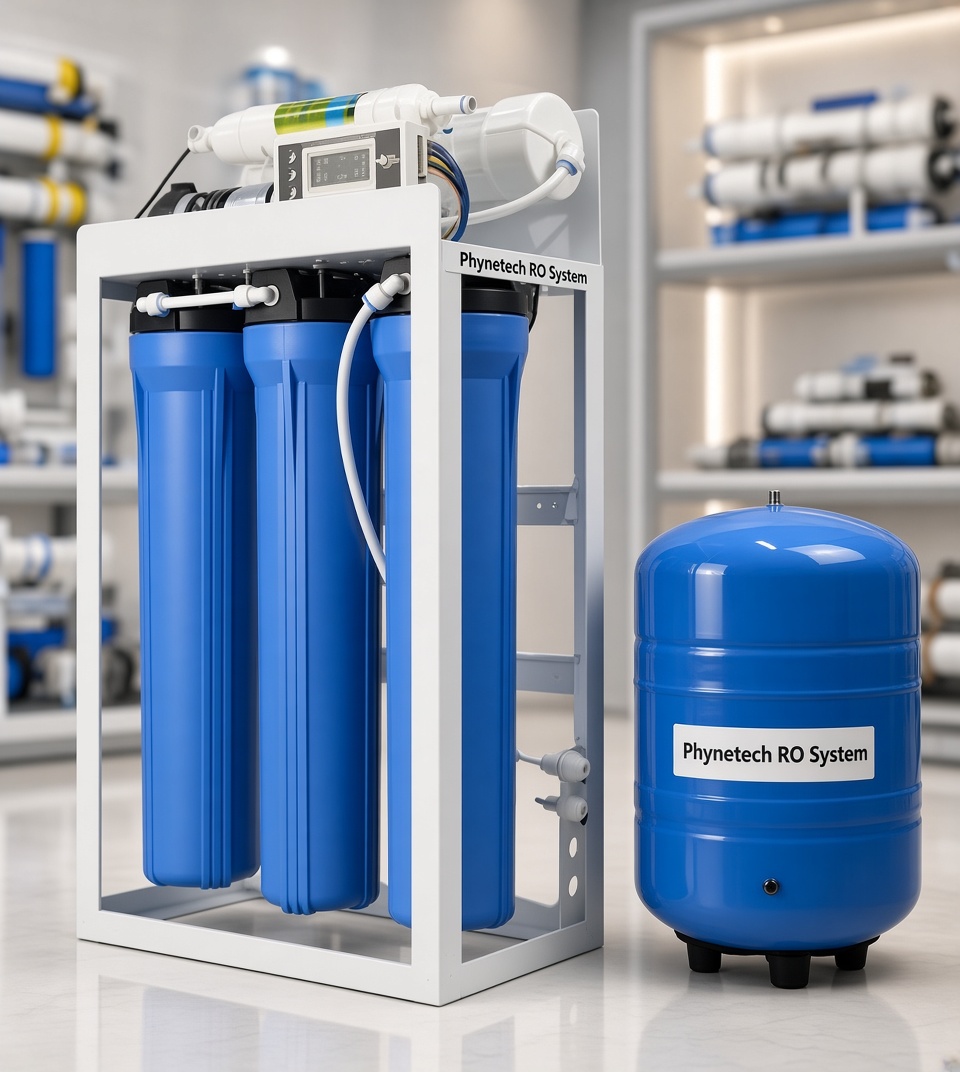 The Phynetech Reverse Osmosis System for Water with Low Salinity Levels is a specialized water purification system engineered for water sources with TDS between 100 and 300 ppm—typical of highland boreholes and municipal supplies in Kenya.
It combines multi-stage filtration—quartz sand media, activated carbon, micron cartridge filtration, reverse osmosis, and UV disinfection—to remove sediment, chemicals, dissolved solids, and biological contaminants. With capacities ranging from 250 L/h to 2000 L/h, it serves applications from residential complexes to water bottling plants.
The system is KEBS certified, backed by a one-year warranty, and supported by countrywide delivery and professional installation in eligible locations.
If you are managing a highland borehole, a municipal water supply, or a commercial venture that requires consistently high-quality water, this machine offers a purpose-built, cost-effective solution.
Learn More About the Phynetech Reverse Osmosis System for Water with Low Salinity Levels
If you are looking for a reliable water purification system for your borehole, business, or institution, you can explore the full specifications, available capacities, and pricing of the Phynetech Reverse Osmosis System For Water With Low Salinity Levels.
For inquiries, contact Phynetech:
- Phone/WhatsApp: +254 720 900 777 | 0717 777 112
- Email: phynetech@gmail.com
- Location: Ruiru Exit 11, Eastern Bypass, Kihunguro, Thika Road, Kenya

Discussion
Testimonials
"Talk of quality products Phynetech limited got u covered.Thanks for always being the best and not forgetting the customer service"
Becky Gichimu
Related Post
For more related Blog posts from Phynetech Limited Kenya