Benefits of RO Systems for Borehole Water in Kenya: Why Invest in a Phynetech RO System
TL;DR Short Answer:
Reverse osmosis (RO) systems offer borehole owners in Kenya comprehensive water purification by removing dissolved solids, heavy metals, fluoride, bacteria, and salinity—contaminants that traditional filtration methods cannot address. For boreholes drawing water with Total Dissolved Solids (TDS) between 100 and 300 ppm—typical of highland sources and many municipal supplies—a Phynetech RO system delivers purified water that is safe for drinking, cooking, and commercial use while protecting plumbing and appliances from damage. But for water sources with high TDS levels of between 500 ppm to 1200 ppm or above, the Phynetech high hardness-high saline reverse osmosis water purifier is ideal. Let us look at the benefits of RO systems for borehole water in Kenya and why invest in a Phynetech RO system.
Introduction
 Kenya has one of the most diverse and challenging groundwater profiles in East Africa. Thousands of households, businesses, schools, and water vending stations depend on boreholes as their primary water source. But as many Kenyans have discovered, borehole water is not always ready for drinking or commercial use.
In areas like Kitengela, Rongai, Athi River, Mombasa, Nakuru, and parts of Kiambu, boreholes often produce water that is salty, hard, or contaminated with dissolved solids and heavy metals. The water may look clear and taste fine, yet carry invisible contaminants that pose serious health risks over time.
This article explains the most common borehole water quality problems in Kenya, how reverse osmosis technology addresses each one, and why a Phynetech RO system—designed specifically for 100–300 ppm TDS water—offers an effective, cost-efficient solution for borehole owners across the country.
Common Borehole Water Problems in Kenya
Borehole water quality varies dramatically across Kenya due to different geological formations. Some areas produce slightly hard water, while others yield extremely salty or high-TDS brackish water that is unsafe for consumption without proper purification.
Total Dissolved Solids (TDS)
TDS measures the total concentration of dissolved substances in water, including salts, minerals, metals, and other compounds. It is one of the most useful single indicators of overall water quality because it captures contaminants that visual inspection misses entirely.
Field testing across Kenya reveals significant variation:
Location |
Typical TDS Range (ppm) |
Water Quality Implication |
| Karen | 150 – 180 | Lowest TDS in regular testing; relatively good quality |
| Ruiru | 220 – 300 | Within acceptable range but worth filtering for dissolved minerals |
| Naivasha | 300 – 600 | Upper end is borderline; also a high-fluoride area |
| Kitengela | 450 – 600 | Consistently elevated; often paired with high fluoride |
| Kajiado | 450 – 600 | Highest consistently recorded TDS |
In Makueni County, a study of 20 drinking water sources found that TDS, hardness, and fluoride concentrations exceeded WHO and KEBS permissible limits in up to 55% of samples. High salinity and fluoride were associated with undesirable taste, gastrointestinal upsets, and cases of dental fluorosis.
Fluoride
Fluoride occurs naturally in underground rocks across the Rift Valley and large parts of central Kenya. In some areas, fluoride levels can rise far above the safe limit of 1.5 mg/L, with some regions recording 10 to even 20 mg/L.
Long-term consumption of fluoride above safe levels causes dental fluorosis—visible as brown staining and pitting on teeth—and in more severe cases, skeletal fluorosis, a painful and debilitating bone condition. Children are particularly vulnerable.
In Naivasha, studies found fluoride levels ranging from 1.20 to 5.00 mg/L across sampled boreholes—significantly above the WHO guideline value. The study concluded that none of the sampled borehole water was suitable for drinking without remediation.
Bacteria and Pathogens
Borehole water is not automatically sterile. Coliform bacteria, including E. coli, can infiltrate aquifers through poorly constructed boreholes, cracked casings, or proximity to latrines and waste sites.
A study of 25 boreholes in Eastleigh, Nairobi County, found that at least one pathogenic bacteria of interest (Escherichia coli, Vibrio cholerae, Salmonella spp, and Shigella spp) was detected in every borehole. The study reported an overall prevalence rate of waterborne illnesses of 8.5%, concluding that waterborne diseases in the region represent a public health concern.
Iron and Manganese
Elevated iron levels are extremely common in Kenyan borehole water. While not immediately dangerous in small quantities, high iron content stains plumbing and laundry, damages appliances, and can cause liver damage with sustained long-term consumption. Manganese at elevated levels is linked to neurological effects, particularly in young children.
In Kitui County, turbidity, iron, and total coliform in borehole water samples were not within recommended KEBS standards.
Hardness
Water hardness—caused by calcium and magnesium salts—leads to scaling on taps, appliances, boilers, and pipes. This reduces equipment efficiency, increases energy costs, and shortens the lifespan of plumbing systems.
Why Traditional Filtration Methods Are Not Enough
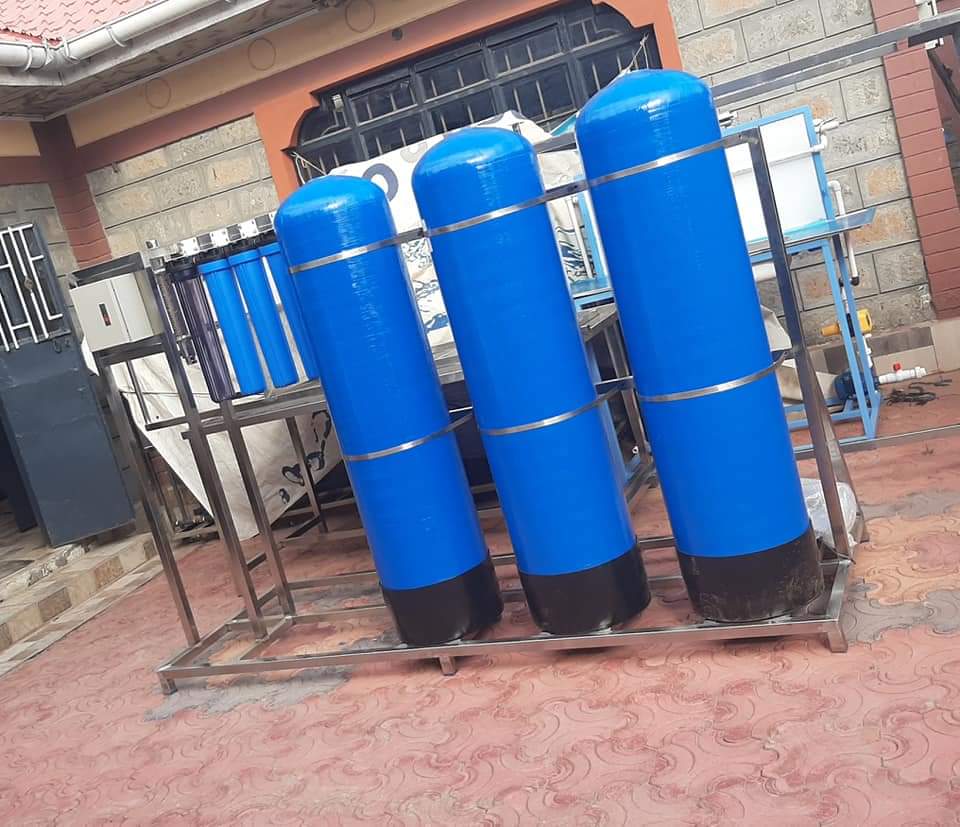 Many Kenyan households boil their borehole water, believing this makes it safe.
Boiling water is effective at killing bacteria and viruses. But it does nothing to remove fluoride, nitrates, heavy metals, or dissolved salts. In fact, boiling concentrates these dissolved contaminants by reducing water volume. Boiling contaminated borehole water does not make it safer from a chemical standpoint—it can actually make it worse.
Traditional filtration methods—like carbon filters, sediment filters, or ultraviolet sterilizers—cannot remove salts, TDS, heavy metals, or hardness. Methods like chlorine, boiling, or carbon filters cannot remove fluoride or salts.
For borehole water in Kenya, only reverse osmosis removes both categories of contamination—biological and chemical—reliably and completely.
How Reverse Osmosis Solves Borehole Water Problems
Reverse osmosis (RO) is a multi-stage purification process that removes impurities at the molecular level. It works by forcing water through a semi-permeable membrane that blocks 95–99% of dissolved contaminants, including salts and heavy metals.
What RO Removes
| Contaminant | How RO Addresses It |
| High TDS | Reduces TDS by 90% or more—a borehole reading of 600 ppm commonly comes out below 50 ppm after RO |
| Fluoride | RO membrane removes fluoride ions, producing safe water even when raw water fluoride is extremely high |
| Bacteria and viruses | RO membrane blocks pathogens; UV disinfection provides an additional biological safety barrier |
| Heavy metals | Removes lead, cadmium, arsenic, iron, and manganese at the molecular level |
| Salinity | Removes dissolved salts, producing softer, better-tasting water |
| Hardness | Removes calcium and magnesium salts that cause scaling |
The Multi-Stage Approach
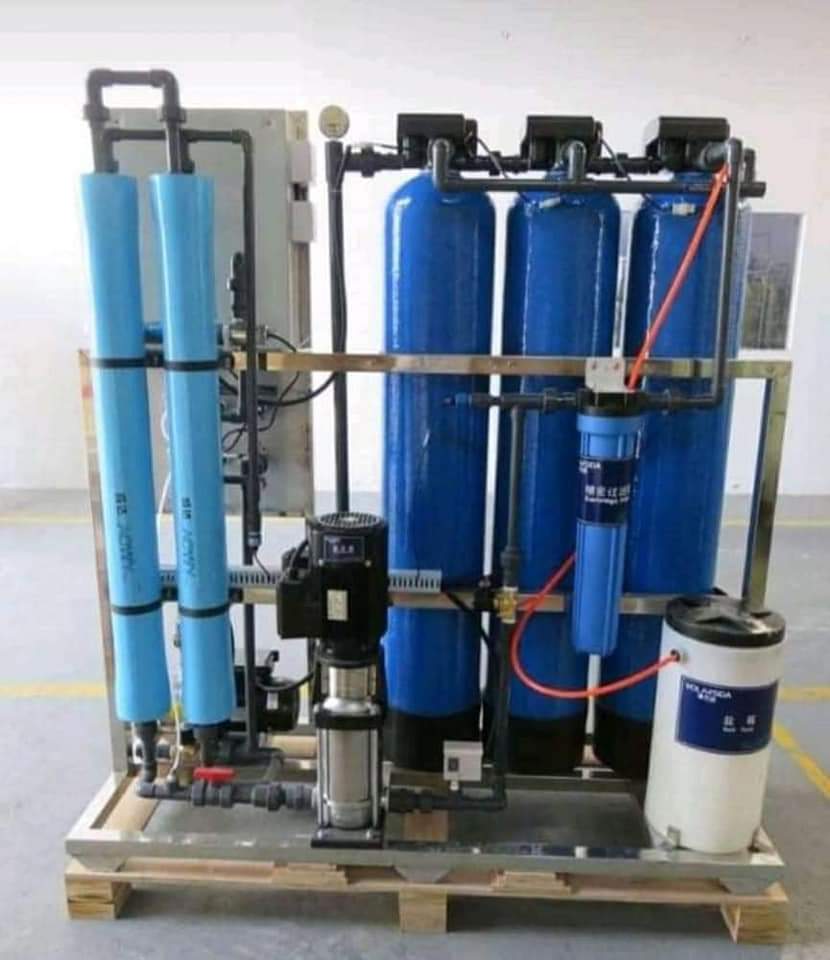
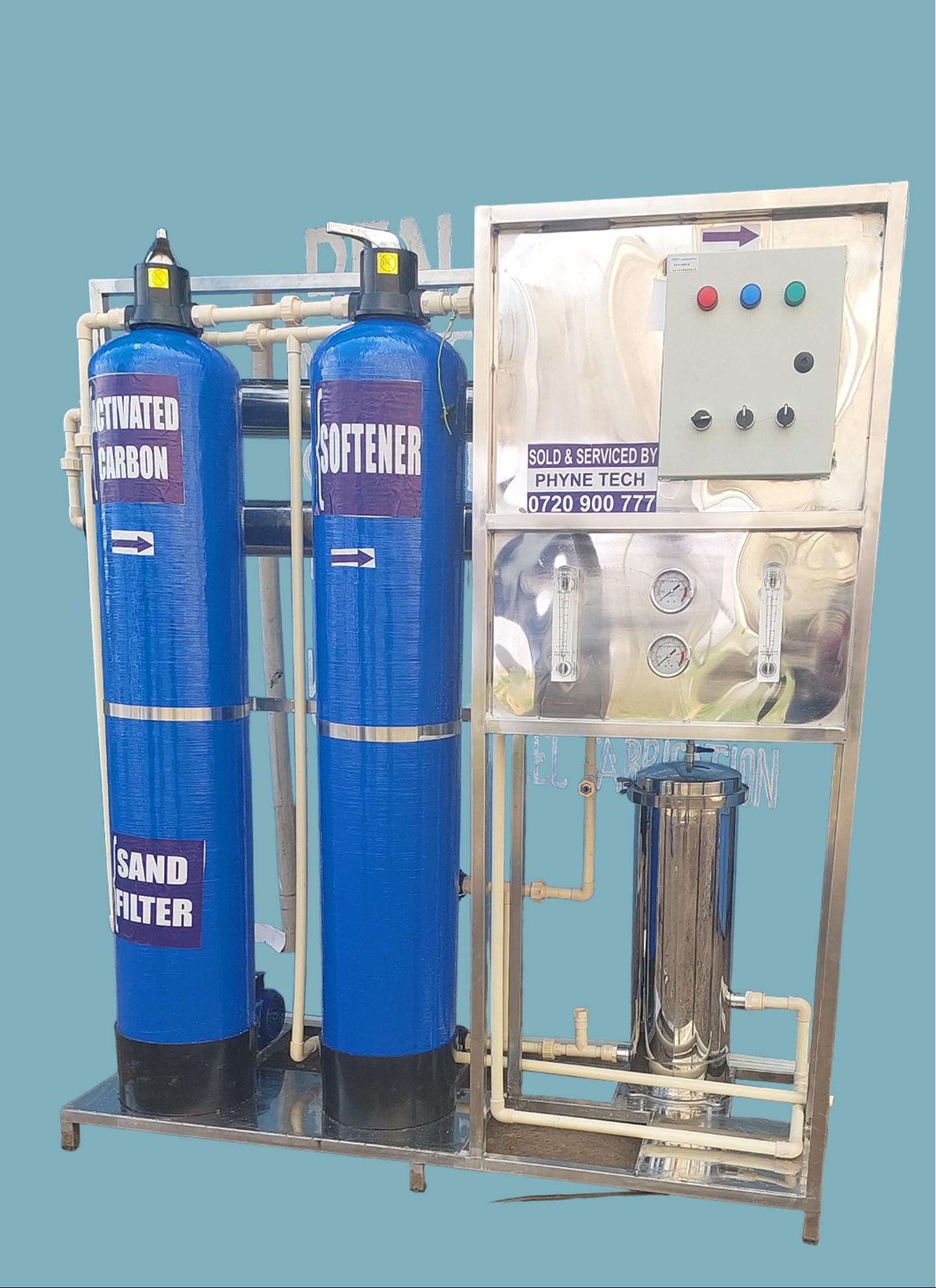 A typical RO system for borehole water includes:
- Pre-filtration: Removes sediments, chlorine, rust, and turbidity
- High-pressure pump: Pushes water into the RO membrane with enough force to separate pure water from contaminants
- RO membrane purification: Removes dissolved salts, fluoride, heavy metals, and other dissolved solids
- Post-treatment: Final polishing filters improve taste and odour
- UV disinfection: Eliminates any remaining biological pathogens
This configuration ensures that even challenging borehole water becomes safe for long-term use.
Key Benefits of RO Systems for Borehole Water in Kenya
- Comprehensive Contaminant Removal
RO is the only technology capable of removing the full spectrum of borehole water contaminants in a single system: fluoride, nitrates, heavy metals, bacteria, viruses, dissolved salts, and sediment. This makes it the most reliable long-term solution for salty or brackish borehole water in Kenya. - Protection of Health
By removing fluoride, RO prevents dental and skeletal fluorosis. By eliminating bacteria and pathogens, it reduces the risk of waterborne diseases such as cholera, typhoid, and gastroenteritis. By removing heavy metals, it prevents long-term health effects including kidney damage, neurological issues, and increased cancer risk. - Improved Taste and Quality
High TDS makes water taste bitter, metallic, or salty. RO dramatically improves taste—water becomes softer, smoother, and neutral. This encourages greater water consumption and makes cooking and food preparation more enjoyable. - Protection of Equipment and Plumbing
High salinity corrodes pipes, pumps, and appliances. Hard water causes scaling on taps, boilers, and plumbing. By removing these contaminants, RO systems extend the lifespan of equipment and reduce maintenance costs. - Cost-Effectiveness for Low-TDS Sources
For boreholes with TDS between 100 and 300 ppm—typical of highland sources and many municipal supplies—a Phynetech low hardness-low saline RO system delivers purified water without the unnecessary cost and energy consumption of systems designed for much harder or more saline water. The system is tuned to handle this specific TDS range efficiently, preventing premature membrane fouling and saving money on maintenance. - KEBS Certification and Compliance
RO systems that meet KEBS standards provide verified performance and safety for the Kenyan market. Certification ensures the equipment has been tested and approved for local conditions, giving borehole owners confidence in their investment.
Why Phynetech RO Machines Are Ideal for Many Kenyan Boreholes
 The Phynetech Reverse Osmosis Machines are specifically engineered for different water sources regardless of their TDS levels. We have RO systems for both low salinity and high salinity water. This makes it particularly well-suited for:
- Highland boreholes: Most highland water sources in Kenya have a mineral profile that requires a delicate balance of filtration
- Municipal water supplies: For water that is already treated but needs final polishing
- Residential complexes: For large households and apartment blocks requiring reliable, high-quality drinking water
- Institutions: Schools, hospitals, and other facilities serving large numbers of people
The system combines five stages of treatment—quartz sand media, activated carbon, micron cartridge filtration, RO membrane separation, and UV disinfection—to deliver consistently high-quality purified water without unnecessary energy consumption.
What the Research Shows
Studies across Kenya consistently demonstrate the need for comprehensive borehole water treatment:
- In Makueni County, TDS, hardness, and fluoride exceeded WHO and KEBS limits in up to 55% of samples.
- In Naivasha, fluoride levels ranged from 1.20 to 5.00 mg/L—well above the safe limit of 1.5 mg/L—and none of the sampled borehole water was suitable for drinking without remediation.
- In Eastleigh, Nairobi, pathogenic bacteria were detected in every borehole sampled, with an 8.5% prevalence rate of waterborne illnesses.
- In Kitui County, turbidity, iron, and total coliform in borehole water were not within recommended KEBS standards.
- In coastal and semi-arid regions, borehole water often carries extremely high levels of dissolved salts and minerals.
These findings underscore a critical reality: borehole water in Kenya cannot be assumed safe without proper treatment.
Benefits of RO Systems for Borehole Water in Kenya- Frequently Asked Questions
- Is RO water safe to drink?
RO water is purified water that meets high safety standards. The system removes harmful contaminants while the UV stage provides biological safety. - Can RO remove fluoride from borehole water?
The RO membrane removes fluoride ions, producing safe water even when raw water fluoride is extremely high. - Does boiling borehole water make it safe?
Boiling kills bacteria and viruses but does nothing to remove fluoride, nitrates, heavy metals, or dissolved salts. In fact, boiling concentrates these contaminants. - How much does an RO system for borehole water cost in Kenya?
A Phynetech RO Machine is available from KSh 230,000 for the 250 L/h capacity up to KSh 1,000,000 for the 2000 L/h capacity. - What size RO system do I need for my borehole?
Choose capacity based on your daily water demand. A 250 L/h system suits small commercial applications and large households; 500 L/h suits growing businesses; 1000 L/h and 2000 L/h models serve water bottling plants and heavy-duty commercial operations. - How often does an RO system need maintenance?
Pre-filters should be replaced every 3–6 months; RO membranes every 2–5 years depending on water quality and usage; UV lamps annually. - Is an RO system suitable for highland boreholes in Kenya?
Our RO systems are specifically designed for highland water sources with TDS between 100 and 300 ppm.
Benefits of RO Systems for Borehole Water in Kenya- Conclusion

Borehole water in Kenya presents a complex challenge: it may look clean and taste fine, yet carry invisible contaminants—fluoride, heavy metals, bacteria, and dissolved salts—that pose serious health risks over time.
Traditional methods like boiling or basic filtration cannot address these contaminants comprehensively. Reverse osmosis is the only proven technology that removes the full spectrum of borehole water contaminants in a single system: fluoride, nitrates, heavy metals, bacteria, viruses, dissolved salts, and sediment.
For boreholes with TDS between 100 and 300 ppm—typical of highland sources and many municipal supplies—the Low Hardness-Low Saline Reverse Osmosis Machine offers a purpose-built, cost-effective solution. It delivers consistently high-quality purified water while protecting health, improving taste, and extending the life of plumbing and equipment. On the other hand, water sources with TDS levels of between 500 ppm to 1200 ppm or above, the our high hardness-high saline reverse osmosis water purifier is perfect.
If your home, business, or institution relies on borehole water, the question is not whether to treat it—it is whether you are using the right technology to do so.
Explore Phynetech Reverse Osmosis Machines
If you are looking for a reliable water purification system for your borehole, business, or institution, explore the full specifications, capacities, and pricing of the Phynetech Reverse Osmosis Machines.
For inquiries, contact Phynetech:
- Phone/WhatsApp: +254 720 900 777 | 0717 777 112
- Email: phynetech@gmail.com
- Location: Ruiru Exit 11, Eastern Bypass, Kihunguro, Thika Road, Kenya
Want to understand more about how reverse osmosis works? Read our guide on How Does a Phynetech Reverse Osmosis System Work.

Discussion
Testimonials
"Talk of quality products Phynetech limited got u covered.Thanks for always being the best and not forgetting the customer service"
Becky Gichimu
Related Post
For more related Blog posts from Phynetech Limited Kenya