RO System Price Guide in Kenya for Year 2026: Phynetech Commercial Reverse Osmosis Costs
TL;DR Short Answer:
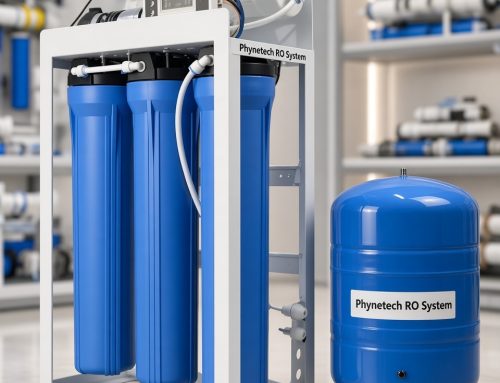
Commercial reverse osmosis systems in Kenya range from approximately KSh 230,000 to KSh 1,000,000+, depending on capacity, treatment stages, and configuration. The Phynetech Reverse Osmosis System is available in four capacities: 250 L/h at KSh 230,000, 500 L/h at KSh 330,000, 1000 L/h at KSh 600,000, and 2000 L/h at KSh 1,000,000. Prices vary based on feed water quality, pre-treatment requirements, membrane configuration, and additional features such as chemical dosing systems. This RO system price guide in Kenya for year 2026 featuring Phynetech commercial reverse osmosis machines costs will break down everything you need to know.
Introduction
If you are researching commercial reverse osmosis systems in Kenya, one of your first questions is almost certainly: “How much does it cost?”
Price is a critical factor in any capital investment decision. But understanding RO system pricing requires more than looking at a single number. The cost of a commercial RO system depends on multiple factors—capacity, feed water quality, treatment stages, brand, certification, installation, and ongoing maintenance.
This guide provides a transparent overview of commercial RO system pricing in Kenya for 2026, with a focus on the Phynetech Reverse Osmosis System. We will break down the costs by capacity, explain what influences pricing, and help you understand the total cost of ownership so you can make an informed investment decision.
RO System Price Guide in Kenya for Year 2026: Phynetech Commercial Reverse Osmosis Costs
Commercial reverse osmosis systems are priced primarily by their production capacity—measured in liters per hour (L/h). Higher capacity systems require larger membranes, more powerful pumps, and more robust components, which drives up the initial purchase price.

Commercial RO System Price Overview: Phynetech RO Machines Pricing
| Capacity | Price (KSh) | Best For |
| 250 L/h | 230,000 | Small commercial applications, large households, clinics, laboratories, small offices |
| 500 L/h | 330,000 | Growing businesses, medium-scale operations, schools, small hotels, apartments |
| 1000 L/h | 600,000 | Water bottling plants, large institutions, hospitals, large hotels |
| 1500 L/h | 850,000 | Water bottling plants, large institutions, hospitals, large hotels |
| 2000 L/h | 1,000,000 | Heavy-duty, continuous high-volume production, industrial applications |
All prices are for manual-type systems and include the full multi-stage treatment process: quartz sand media filtration, activated carbon filtration, micron cartridge filtration, RO membrane separation, and UV disinfection.
Price Comparison Across the Market
To help you understand how Phynetech’s pricing compares, here is a snapshot of the broader Kenyan market:
| System | Capacity | Price (KSh) | Source |
| Phynetech RO250L | 250 L/h | 230,000 | Phynetech |
| Neema Technologies 250 LPH | 250 L/h | 250,000 | Neema Technologies |
| Watertech RO System | 250+ L/h | 330,000 | Watertech |
| Saset RO System | 200-1000 L/h | 250,000 | Saset |
| Phynetech RO500L | 500 L/h | 330,000 | Phynetech |
| 500 LPH RO Machine | 500 L/h | 450,000 | Water Purifiers |
| Phynetech RO1000L | 1000 L/h | 600,000 | Phynetech |
| Neema Technologies 1000 LPH | 1000 L/h | 650,000 | Neema Technologies |
| Phynetech RO2000L | 2000 L/h | 1,000,000 | Phynetech |
Note: Prices are accurate as of 2026 and are subject to change based on market conditions, exchange rates, and manufacturer adjustments.
RO System Price Guide in Kenya for Year 2026: What Affects RO System Prices?
Several factors influence the final cost of a commercial RO system beyond the base capacity price. Understanding these factors helps you evaluate quotes and avoid unexpected costs.
- Feed Water Quality
The quality of your source water is one of the most significant factors affecting system cost.
| Water Quality | Impact on Cost |
| Low TDS (100–300 ppm) | Lower cost—standard membranes and lower pressure pumps suffice |
| Medium TDS (500–1000 ppm) | Higher cost—requires more membrane area, higher pressure |
| High TDS (1000+ ppm) | Significantly higher cost—brackish or seawater membranes, more energy |
| High iron or manganese | Additional pre-treatment required, increasing cost |
| High fluoride | May require specialized membranes or additional treatment stages |
The Low Hardness-Low Saline RO Machine is specifically engineered for water with TDS between 100 ppm and 300 ppm—typical of highland boreholes and municipal supplies in Kenya. This targeted design means you are not paying for unnecessary capacity or energy consumption.
- Treatment Stages and Configuration
The number and type of treatment stages directly affect system cost:
| Treatment Stage | Approximate Cost Impact |
| Basic RO (membrane only) | Lowest cost—but inadequate for most applications |
| RO + pre-filtration | Moderate cost—sediment and carbon filters |
| RO + pre-filtration + UV | Higher cost—biological safety |
| RO + pre-filtration + UV + chemical dosing | Highest cost—antiscalant, chlorine, pH adjustment |
 The RO Machine includes all essential stages as standard: sand media filtration, activated carbon, micron cartridge, RO membrane, and UV disinfection. Optional chemical pre-treatment (chlorine dosing, antiscalant injection, pH adjustment) adds to the cost but may be necessary for certain water conditions.
- Membrane Type and Quantity
-
- Standard membranes: Lower cost, suitable for low-to-medium TDS
- High-rejection membranes: Higher cost, remove up to 99% of dissolved solids
- Multiple membranes: Higher capacity systems use multiple membrane elements, increasing cost
- Control System
-
- Manual operation: Lower cost—operator controls the system
- Semi-automatic: Moderate cost—some automated functions
- Fully automatic: Higher cost—PLC-controlled, remote monitoring
Phynetech RO machines keep costs affordable while still delivering commercial-grade performance.
- Brand and Certification
-
- KEBS-certified systems: May cost more but provide verified quality and safety
- Imported vs. locally assembled: Imported systems may have higher costs due to shipping and duties
- Brand reputation: Established manufacturers typically command premium pricing
Phynetech systems are KEBS certified, meaning they meet verified performance and safety standards for the Kenyan market.
- Installation and Commissioning
- Basic installation: May be included free of charge
- Complex installation: Additional costs for plumbing, electrical work, and site preparation
- Commissioning: System testing and calibration
Phynetech offers free installation and commissioning where applicable.
Hidden Costs to Consider
When budgeting for a commercial RO system, the purchase price is only the beginning. Consider these additional costs:
Ongoing Operating Costs
| Cost Category | Estimated Annual Cost | Notes |
| Pre-filter replacements | KSh 10,000–30,000 | Sediment and carbon filters replaced every 3–6 months |
| RO membrane replacement | KSh 22,000+ per membrane | Membranes last 2–5 years; larger systems use multiple membranes |
| UV lamp replacement | KSh 5,000–10,000 | Replaced annually |
| Chemicals | Varies | Antiscalant, chlorine, pH adjustment chemicals |
| Electricity | Varies | High-pressure pump energy consumption |
| Maintenance labor | Varies | Technician visits and service contracts |
One-Time Costs
| Cost Category | Estimated Cost | Notes |
| Water testing | KSh 5,000–20,000 | Comprehensive laboratory analysis |
| Site preparation | Varies | Plumbing, electrical, foundation work |
| Storage tank | Varies | For purified water buffer storage |
| Delivery | Varies | May be included or charged separately |
Water Loss (Recovery Rate)
Commercial RO systems typically recover 60–75% of feed water as purified water, meaning 25–40% is discharged as concentrate (waste). This water loss represents an ongoing cost if you pay for your feed water supply.
Is a Cheaper System Worth It?
When comparing RO system prices, it is tempting to choose the lowest-cost option. However, cheaper systems often come with trade-offs:
| Trade-off | Potential Consequence |
| Lower-quality membranes | Shorter lifespan, higher replacement frequency |
| Fewer treatment stages | Inadequate purification, health risks, non-compliance |
| No certification | May not meet KEBS standards; legal and health risks |
| Poor after-sales support | Difficult to get parts and service; extended downtime |
| Incorrect sizing | Underperformance or wasted capacity |
A KEBS-certified system from a reputable supplier with local support represents better value over the long term than a cheaper uncertified import with no local service network.
RO System Price vs. Value
 When evaluating RO system costs, consider the value the system delivers:
Direct Value
- Safe drinking water: Protects health and reduces medical costs
- Regulatory compliance: Meets KEBS requirements; avoids fines
- Business enablement: Enables water bottling, food processing, and other commercial activities
Indirect Value
- Equipment protection: Reduces scaling and corrosion in plumbing and appliances
- Brand reputation: Demonstrates commitment to quality and safety
- Peace of mind: Reliable water supply; reduced downtime
Return on Investment (ROI) Example: Water Bottling Business
| Item | Calculation |
| RO1000L investment | KSh 600,000 |
| Daily production | 8,000–10,000 liters |
| Bottled water selling price | KSh 50–100 per 20L jerrycan |
| Daily revenue potential | KSh 20,000–50,000 |
| Payback period | 12–30 days (at full capacity) |
ROI varies significantly by application and market conditions. This is an illustrative example only.
Financing and Payment Options
Commercial RO systems represent a significant capital investment. Consider these financing options:
- Cash purchase: Full payment upfront; may qualify for discounts
- Business loans: Available from Kenyan banks and microfinance institutions
- Equipment leasing: Some suppliers offer lease-to-own arrangements
- Supplier financing: Phynetech may offer flexible payment terms—inquire directly
How to Get an Accurate Quote
To get an accurate price for a commercial RO system, you need to provide:
- Water quality test results: TDS, hardness, pH, iron, fluoride, bacterial count
- Required capacity: Liters per hour or daily production needs
- Application: Drinking water, bottling, industrial process, etc.
- Site information: Location, power supply, space available
- Budget range: Helps the supplier recommend appropriate options
Phynetech offers free consultation and can advise on the right system for your specific needs.
RO System Price Guide in Kenya for Year 2026: Frequently Asked Questions
- How much does a commercial RO system cost in Kenya?
Commercial RO systems in Kenya range from approximately KSh 230,000 for a 250 L/h system to KSh 1,000,000+ for a 2000 L/h system. - How much does a 1000 LPH RO system cost in Kenya?
A 1000 L/h RO system typically costs between KSh 600,000 and KSh 680,000, depending on configuration and supplier. - What is the cheapest commercial RO system in Kenya?
The Phynetech RO250L at KSh 230,000 is one of the most affordable entry-level commercial RO systems available. - Are there financing options available?
Many suppliers offer flexible payment terms. Contact Phynetech directly to discuss available options. - How much does installation cost?
Phynetech offers free installation and commissioning where applicable. For other suppliers, installation costs vary based on site complexity. - What ongoing costs should I budget for?
Budget for pre-filter replacements (every 3–6 months), membrane replacement (every 2–5 years), UV lamp replacement (annually), chemicals, electricity, and maintenance labor. - Is KEBS certification worth the extra cost?
KEBS certification ensures the system meets verified performance and safety standards for the Kenyan market. Non-compliance can result in legal penalties. - How do I know which capacity I need?
Calculate your daily water demand, add a 20–30% safety factor, and divide by your planned operating hours. Our What Size RO System Do I Need? guide provides a detailed explanation. - Does the price include delivery?
Delivery terms vary by supplier. Phynetech offers countrywide delivery—inquire for specific terms. - Can I get a discount for buying multiple systems?
Volume discounts may be available for bulk purchases. Contact Phynetech directly for a quotation.
RO System Price Guide in Kenya for Year 2026: Conclusion
Commercial RO system prices in Kenya for 2026 range from approximately KSh 230,000 for a 250 L/h system to KSh 1,000,000+ for a 2000 L/h system. The Phynetech Reverse Osmosis System offers transparent, capacity-based pricing:
| Capacity | Price (KSh) |
| 250 L/h | 230,000 |
| 500 L/h | 330,000 |
| 1000 L/h | 600,000 |
| 1500 L/h | 850,000 |
| 2000 L/h | 1,000,000 |
 When evaluating RO system costs, look beyond the purchase price to consider total cost of ownership—including filters, membranes, energy, chemicals, and maintenance. A KEBS-certified system from a reputable supplier with local support typically offers better long-term value than a cheaper uncertified alternative.
For an accurate quote tailored to your specific water quality and capacity needs, contact Phynetech directly with your water test results and application requirements.
Get a Quotation for the Phynetech Reverse Osmosis System
If you are ready to invest in a commercial RO system for your borehole, business, or institution, contact Phynetech for a personalized quotation based on your specific water quality and capacity requirements.
- Phone/WhatsApp: +254 720 900 777 | 0717 777 112
- Email: phynetech@gmail.com
- Location: Ruiru Exit 11, Eastern Bypass, Kihunguro, Thika Road, Kenya
Explore the full specifications of the Phynetech 500L Reverse Osmosis System.
Need help choosing the right capacity? Read our guide on What Size RO System Do I Need? or contact Phynetech for a free consultation.

Discussion
Testimonials
"Talk of quality products Phynetech limited got u covered.Thanks for always being the best and not forgetting the customer service"
Becky Gichimu
Related Post
For more related Blog posts from Phynetech Limited Kenya