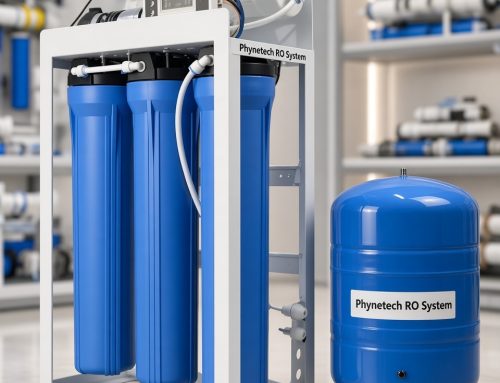
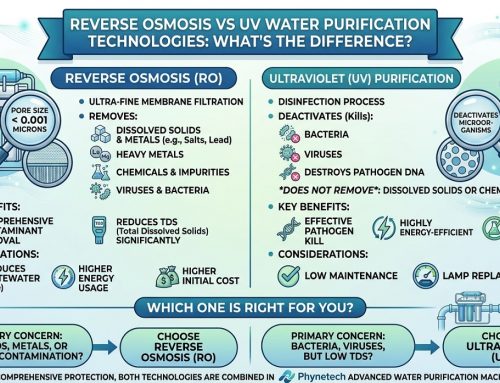
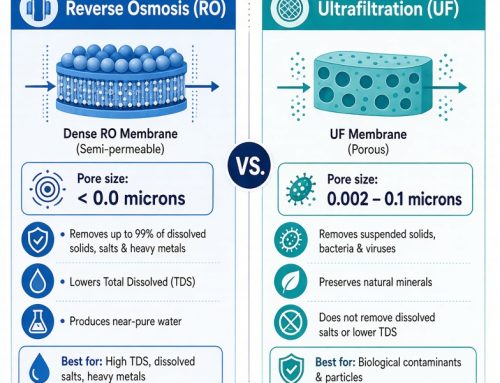
How Does a Phynetech Reverse Osmosis System Work? A Complete Guide to the Working Science of RO Systems
TL;DR Short Answer:
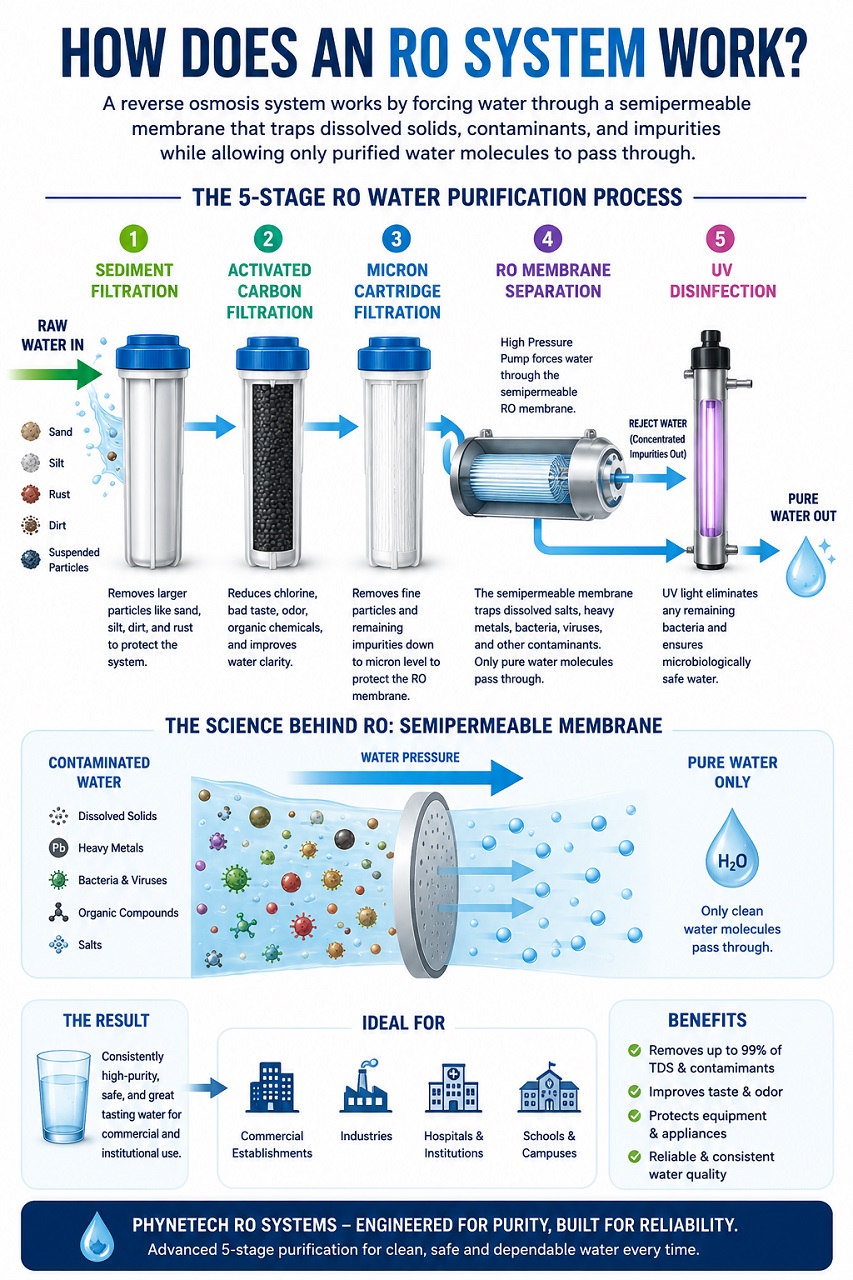
A reverse osmosis system works by forcing water through a semipermeable membrane that traps dissolved solids, contaminants, and impurities while allowing only purified water molecules to pass through. In the Reverse Osmosis Machine, this process is enhanced by a five-stage treatment sequence: sediment filtration, activated carbon filtration, micron cartridge filtration, RO membrane separation, and UV disinfection—delivering consistently high-purity water for commercial and institutional use.
Introduction
If you have ever wondered how reverse osmosis (RO) systems turn ordinary—or even questionable—water into clean, safe drinking water, this guide will walk you through the process step by step.
Reverse osmosis is one of the most effective water purification technologies available today. It removes dissolved solids, chemicals, heavy metals, and biological contaminants at a molecular level. But how does it actually work? And what makes the Reverse Osmosis Machine different from standard filtration systems?
This article explains the science behind reverse osmosis, breaks down the five-stage purification process in simple terms, and shows you exactly what happens to water as it passes through each stage of the system.
How Does a Phynetech Reverse Osmosis System Work? The Science Behind Reverse Osmosis
What Is Osmosis?
To understand reverse osmosis, it helps to first understand osmosis—a natural process that occurs in living cells.
Osmosis is the movement of water molecules across a semipermeable membrane from a region of lower dissolved-solute concentration to a region of higher concentration. The water naturally tries to “dilute” the more concentrated solution until both sides reach equilibrium. This process happens without any external energy—it is simply nature balancing itself.
What Is Reverse Osmosis?
Reverse osmosis does exactly what the name suggests: it reverses the natural flow of water.
Instead of water moving from low concentration to high concentration, pressure is applied to the high-concentration side (the feed water). This pressure forces water molecules through the semipermeable membrane in the opposite direction, leaving dissolved solids, salts, and contaminants behind.
The result? One stream of purified water (called permeate) and another stream of concentrated waste water (called concentrate or brine).
Why Pressure Matters
The amount of pressure required depends on the feed water’s TDS (Total Dissolved Solids). Higher TDS water requires more pressure to overcome the natural osmotic pressure. This is why the Low Hardness-Low Saline RO Machine—designed for 100–300 ppm TDS—operates at lower pressures than systems designed for brackish or seawater, making it more energy-efficient.
The 5-Stage Purification Process
The Phynetech Reverse Osmosis Water Purification System uses a comprehensive five-stage treatment sequence to ensure water is thoroughly purified at every step.
Stage |
Filtration Method |
Purpose |
What It Removes |
| Stage 1 | Quartz & Sand Media Filtration | Physical sediment removal | Sand, silt, rust, suspended solids, large particles |
| Stage 2 | Activated Carbon Filtration | Chemical and odor removal | Chlorine, pesticides, herbicides, organic compounds, unpleasant tastes and odors |
| Stage 3 | Micron Cartridge Filtration | Fine particle removal | Fine sediment and particles that could damage the RO membrane |
| Stage 4 | Reverse Osmosis Membrane | Dissolved solid removal | Up to 99% of dissolved salts, heavy metals, fluoride, nitrates, and other contaminants |
| Stage 5 | UV Disinfection | Biological safety | Bacteria, viruses, protozoa, and other pathogens |
Let us examine each stage in greater detail.
Stage 1: Quartz and Sand Media Filtration
The First Line of Defense 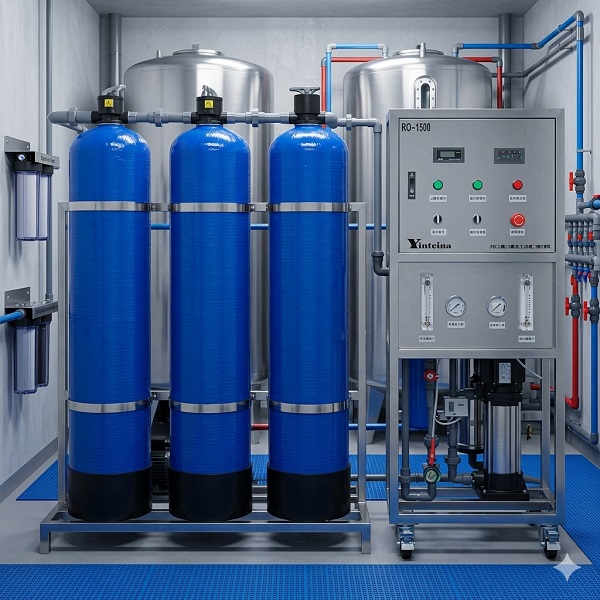
Water entering the system first passes through a vessel containing layers of quartz sand and other filter media. This is a physical filtration step—no chemicals are involved.
What It Removes
- Sand and silt
- Rust particles
- Suspended solids
- Large debris that could damage downstream components
Why It Matters
If sediment reaches the RO membrane, it can cause scratches, fouling, and permanent damage. The sand media stage acts as a protective barrier, significantly extending the lifespan of the more delicate components that follow.
How Often Is It Maintained?
The media requires periodic backwashing—a process where water is flushed backward through the media to remove trapped particles. The frequency depends on feed water quality and usage volume.
Stage 2: Activated Carbon Filtration
Chemical and Taste Treatment
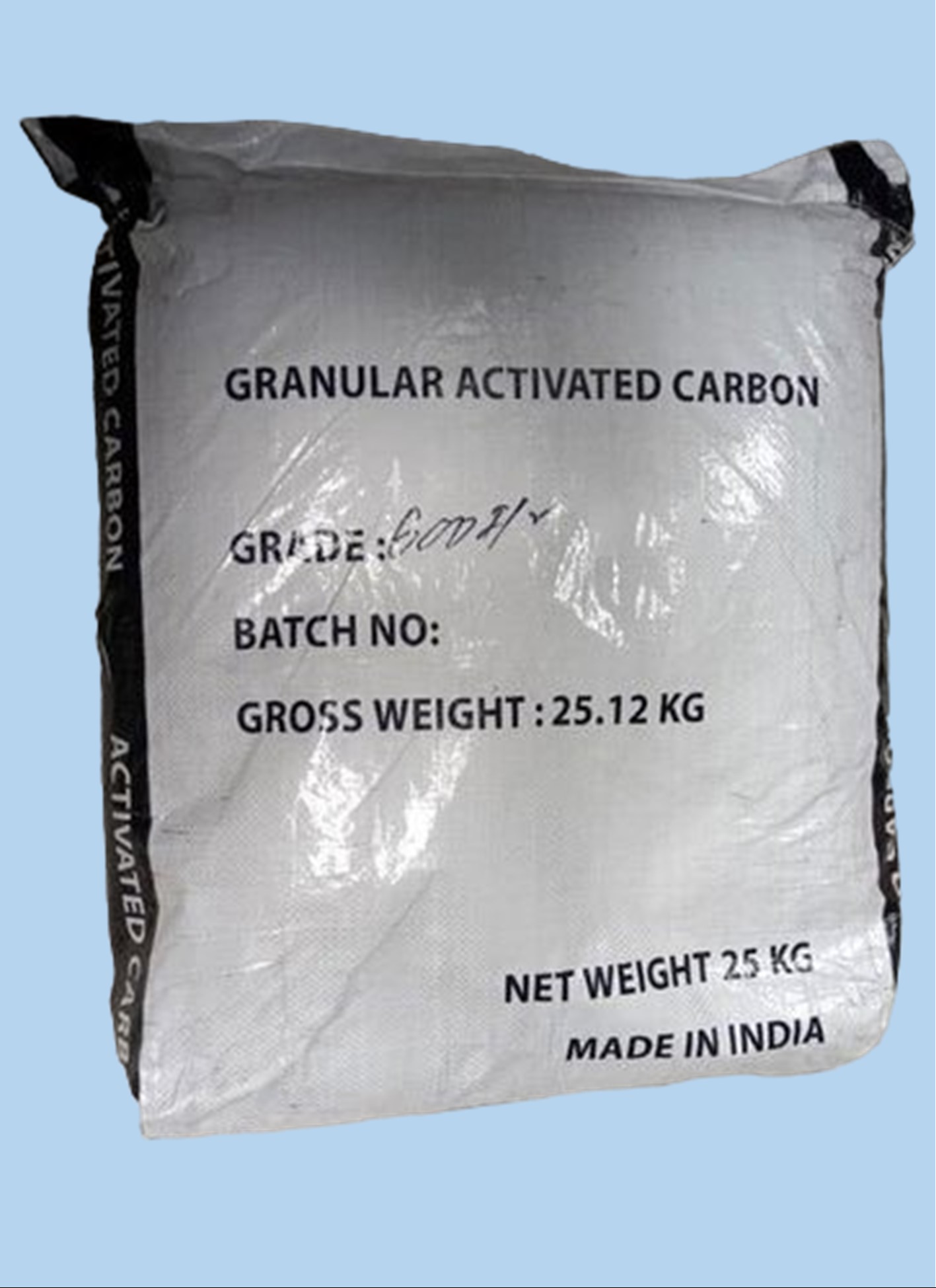 After sediment removal, water flows through an activated carbon filter. Activated carbon is a highly porous material that traps impurities through a process called adsorption—where contaminants adhere to the surface of the carbon.
What It Removes
- Chlorine: The most common water disinfectant, chlorine can damage RO membranes and must be removed before the RO stage.
- Pesticides and herbicides: Common agricultural runoff contaminants.
- Volatile organic compounds (VOCs): Industrial chemicals that can affect taste and safety.
- Unpleasant tastes and odors: Many people notice an immediate improvement in water taste after carbon filtration.
Why It Matters
Chlorine is particularly damaging to polyamide RO membranes. Without this stage, the membrane would degrade quickly, leading to expensive replacements. The carbon filter protects the membrane and improves the overall quality of the final water.
Stage 3: Micron Cartridge Filtration
Fine Particle Protection
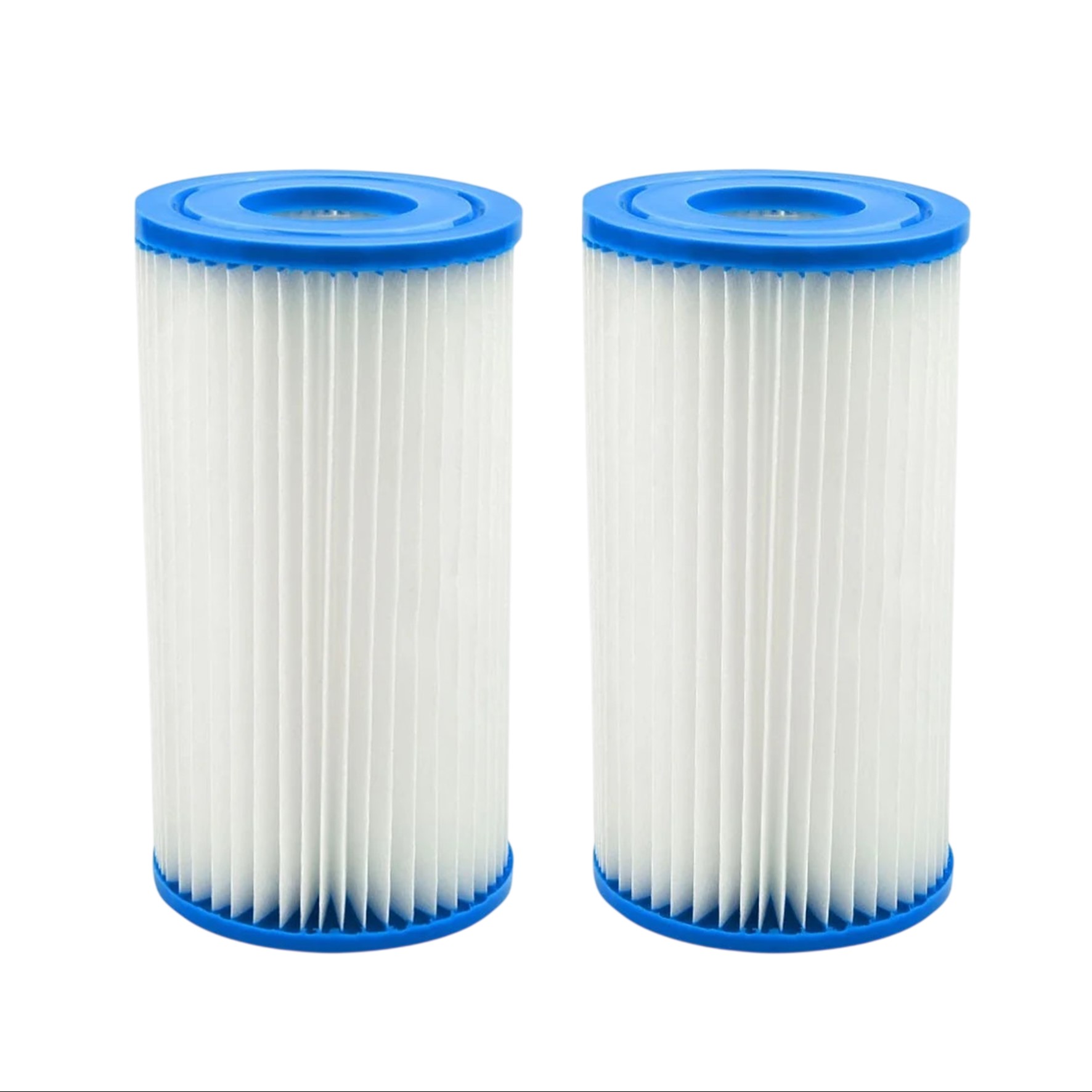 This stage uses a precision cartridge filter—typically rated at 5 microns or smaller—to capture any remaining particles that passed through the sand and carbon stages.
What It Removes
- Fine sediment not captured in Stage 1
- Carbon fines (tiny carbon particles that may have broken free from the carbon filter)
- Any other small particles that could foul the RO membrane
Why It Matters
The RO membrane is extremely sensitive to particles. Even microscopic sediment can cause damage or reduce efficiency. This stage acts as the final pre-treatment guard before water reaches the membrane.
Stage 4: Reverse Osmosis Membrane
The Heart of the System
This is where the actual reverse osmosis happens.
How the Membrane Works
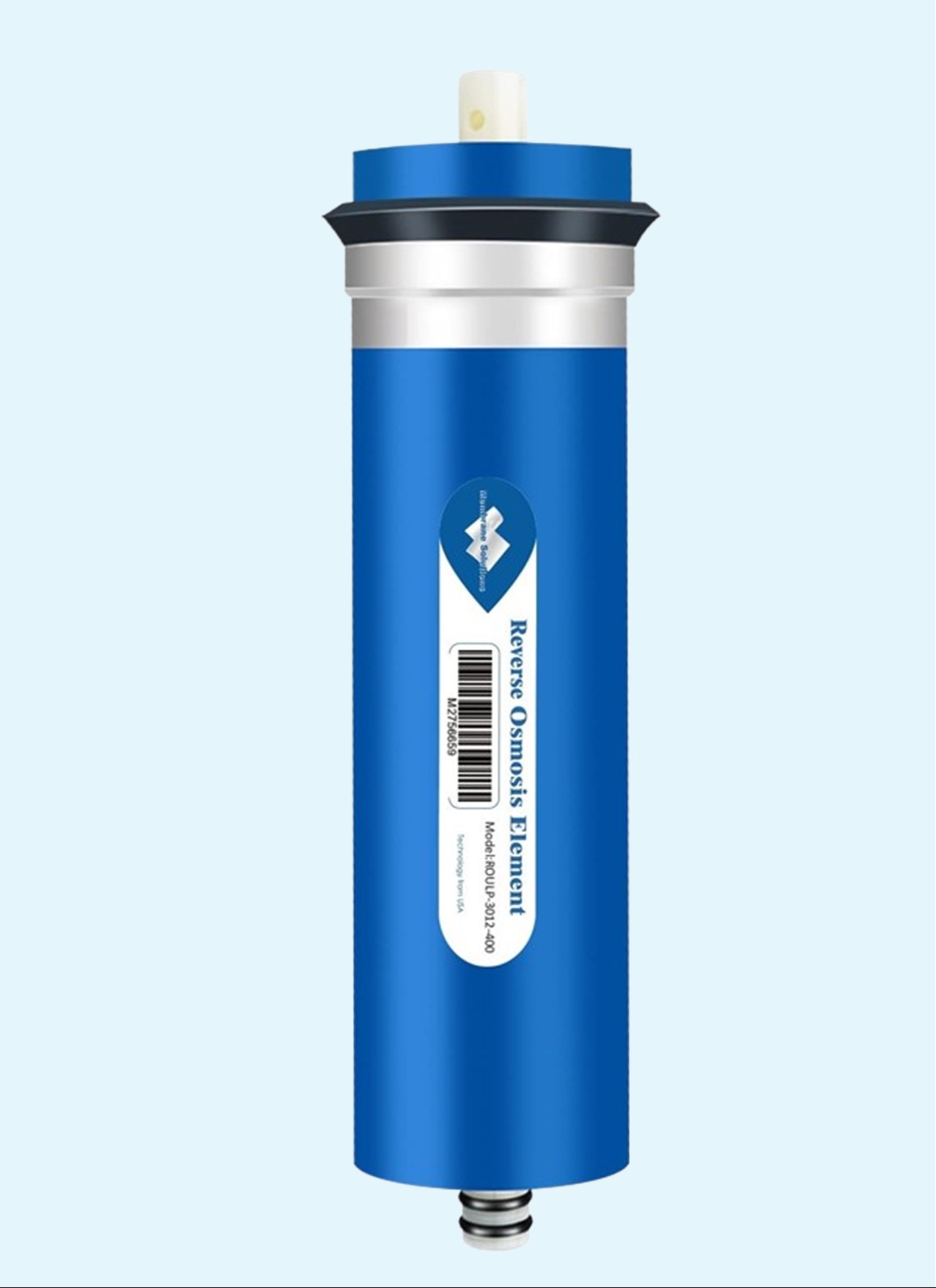 The RO membrane is a semipermeable material with pores so tiny they are measured in angstroms—smaller than a billionth of a meter. These pores are large enough to allow water molecules to pass through but small enough to trap dissolved solids, salts, and contaminants.
High-pressure pumps push water through the membrane module. The pressure overcomes the natural osmotic pressure and forces water molecules through the membrane, while the dissolved contaminants are rejected and flushed away in the concentrate stream.
What It Removes
- Dissolved salts: Sodium, calcium, magnesium, and other minerals
- Heavy metals: Lead, mercury, arsenic, and cadmium
- Fluoride and nitrates
- Pesticides and herbicides (remaining after carbon filtration)
- Pharmaceutical residues
- Up to 99% of total dissolved solids
What It Does NOT Remove
- Some dissolved gases (which can be removed with additional degassing)
- Some volatile organic compounds (VOCs) that may have passed the carbon filter
- Bacteria and viruses (addressed in Stage 5)
This is why the UV stage is essential.
Rejection Rate
The efficiency of an RO membrane is measured by its rejection rate—the percentage of dissolved solids removed. High-quality commercial membranes typically achieve rejection rates of 98% to 99%.
Stage 5: UV Disinfection
Biological Safety
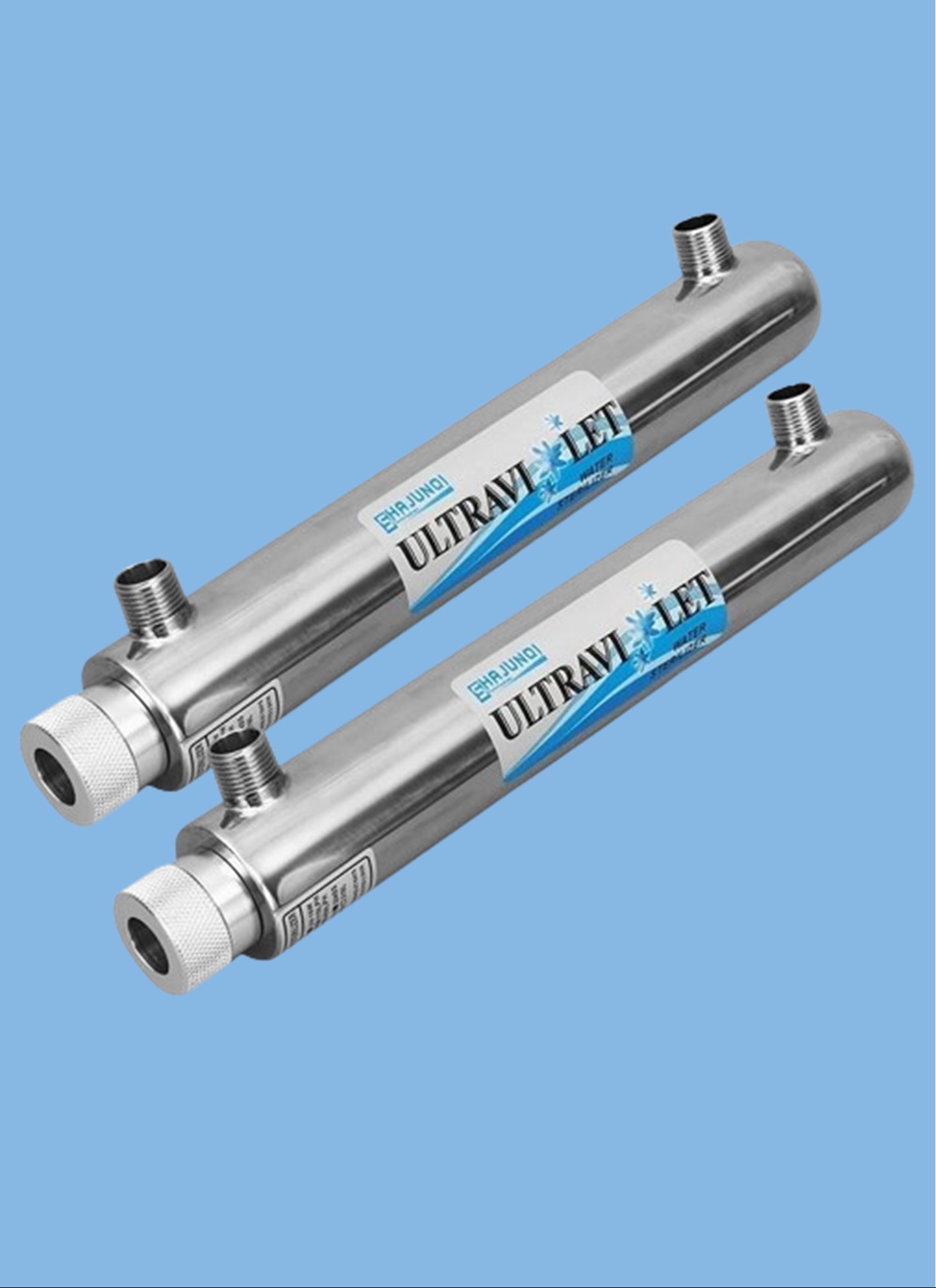 The final stage exposes the purified water to ultraviolet (UV) light at a specific wavelength (254 nanometers) that disrupts the DNA of microorganisms, rendering them harmless.
What It Removes
- Bacteria: E. coli, Salmonella, and other pathogenic bacteria
- Viruses: Hepatitis, Rotavirus, and other waterborne viruses
- Protozoa: Cryptosporidium and Giardia
- Fungi and algae spores
Why It Matters
While the RO membrane is extremely effective at removing biological contaminants, there is still a small possibility of membrane imperfections or bypass. UV disinfection provides an absolute final barrier—ensuring that water leaving the system is biologically safe for human consumption.
Important Note
UV disinfection does not remove chemical contaminants. It only addresses biological pathogens. This is why it is always placed after the RO stage—the RO system removes the chemicals, and UV ensures biological safety.
Optional Chemical Pre-Treatment
In addition to the five core stages, the Phynetech Reverse Osmosis Water Purification System may include optional chemical pre-treatment depending on feed water conditions:
Chlorine Dosing
If the feed water contains high levels of biological contaminants before the system, chlorine may be injected early to control biofilm growth. (Note: This chlorine is then removed by the activated carbon filter before the RO membrane.)
Antiscalant Injection
Antiscalants are chemicals that prevent mineral scaling on the RO membrane. This is particularly useful in water with high hardness or high silica content.
pH Adjustment
Adjusting the pH of the feed water helps optimize membrane performance and prevent scaling. Some applications require neutral pH water as a final output.
These pre-treatment options are tailored to each specific application and water analysis.
What Does Reverse Osmosis Remove?
To give you a clear picture, here is a summary of what an RO system removes and what it does not:
| Removed | Not Removed |
| Dissolved salts (sodium, calcium, magnesium) | Some dissolved gases (oxygen, carbon dioxide) |
| Heavy metals (lead, mercury, arsenic) | Certain volatile organic compounds (VOCs) |
| Fluoride and nitrates | Some pesticides (if carbon filter is inadequate) |
| Bacteria and viruses (with UV stage) | – |
| Chlorine and chemical residues (with carbon stage) | – |
| Sediment and suspended solids (with pre-filtration) | – |
| Pesticides and herbicides (with carbon + RO) | – |
What Happens to the Waste Water?
During the reverse osmosis process, a portion of the feed water is rejected as concentrate (also called brine) containing all the dissolved solids that were removed.
Typical Recovery Rate
Most commercial RO systems recover 60% to 75% of feed water as purified water, meaning 25% to 40% is discharged as concentrate.
Is the Concentrate Water Wasted?
The concentrate stream contains high concentrations of salts and minerals. While some applications can recover and reuse it (for irrigation or cleaning), it is typically discharged to the drain.
Can This Be Improved?
Systems can be designed with two-pass or concentrate recycling configurations to improve overall water efficiency. This is a consideration for high-volume applications where water conservation is critical.
How Long Does an RO Membrane Last?
Under proper operating conditions, a commercial RO membrane typically lasts 2 to 5 years, depending on:
- Feed water quality (lower TDS means longer life)
- Pre-treatment effectiveness
- Operating pressure and temperature
- Cleaning frequency and maintenance
- Chemical dosing accuracy
Signs that a membrane needs replacement include:
- Reduced permeate flow rate
- Increased salt passage (lower rejection rate)
- Higher operating pressure required
- Frequent fouling
Phynetech provides genuine replacement parts and after-sales service to keep systems operating at peak performance.
Frequently Asked Questions on How Does a Phynetech Reverse Osmosis System Work?
- How does reverse osmosis work in simple terms?
Reverse osmosis forces water through a special membrane that traps contaminants while allowing only water molecules to pass through. Think of it as a microscopic filter that is so fine it catches dissolved salts and chemicals, not just visible dirt. - Does reverse osmosis remove all minerals from water?
Yes and no. RO removes dissolved minerals, including beneficial ones like calcium and magnesium. This is why some systems include a remineralization stage, though for most commercial and industrial applications, purified water is preferred. - Does RO remove bacteria?
The RO membrane itself is highly effective at removing bacteria, but the system includes a dedicated UV disinfection stage as a final biological safety barrier. - How much water does an RO system waste?
Commercial systems typically recover 60% to 75% of feed water as purified water, meaning 25% to 40% is discharged as concentrate. - How long does an RO membrane last?
Under proper operating conditions, a commercial RO membrane typically lasts 2 to 5 years before replacement is needed. - How often should RO filters be changed?
- Sand media: Backwashed regularly; replaced every 2–3 years depending on condition
- Carbon filter: Replaced every 6–12 months
- Micron cartridge: Replaced every 3–6 months or when pressure drops indicate clogging
- RO membrane: 2–5 years depending on operating conditions
- UV lamp: Replaced annually
- Can RO water be used for drinking?
RO water is purified water that meets high safety standards. The system removes harmful contaminants while the UV stage provides biological safety. - How much water can the Low Hardness-Low Saline RO Machine produce?
The system is available in four capacities: 250 liters per hour, 500 L/h, 1000 L/h, and 2000 L/h.
How Does a Phynetech Reverse Osmosis System Work? Conclusion
Reverse osmosis is a powerful water purification technology that uses pressure and a semipermeable membrane to remove up to 99% of dissolved solids, chemicals, and contaminants from water.
The Phynetech Reverse Osmosis Water Purification System enhances this technology with a comprehensive five-stage treatment process: quartz sand and media filtration, activated carbon filtration, micron cartridge filtration, RO membrane separation, and UV disinfection. Each stage plays a specific role, from removing sediment and chlorine to trapping dissolved salts and eliminating pathogens.
Designed specifically for water sources with TDS between 100 and 300 ppm—typical of highland boreholes and municipal supplies in Kenya—this system delivers consistent, high-quality purified water for commercial, institutional, and industrial applications without unnecessary energy or maintenance costs.
Whether you are exploring water purification for a borehole, a water bottling venture, or an institution, understanding how the process works helps you appreciate the value of each stage—and the importance of regular maintenance to keep the system performing at its best.
Explore the Phynetech Reverse Osmosis Water Purification System
If you are looking for a reliable water purification system engineered for low-TDS water sources, explore the full specifications, capacities, and pricing of the Phynetech Reverse Osmosis Water Purification System.
For inquiries, contact Phynetech:
- Phone/WhatsApp: +254 720 900 777 | 0717 777 112
- Email: phynetech@gmail.com
- Location: Ruiru Exit 11, Eastern Bypass, Kihunguro, Thika Road, Kenya
Interested in understanding more about water quality? You may also find our guide on the importance of doing a water analysis lab test before investing in a RO system helpful.

Discussion
Testimonials
"Talk of quality products Phynetech limited got u covered.Thanks for always being the best and not forgetting the customer service"
Becky Gichimu
Related Post
For more related Blog posts from Phynetech Limited Kenya