The Best Commercial RO System Buying Guide in Kenya: How to Choose the Right System
TL;DR Short Answer:
Choosing the right commercial reverse osmosis system in Kenya requires evaluating five key factors: feed water quality (TDS and hardness), required production capacity (liters per hour), treatment stages needed, certification and compliance (KEBS standards), and total cost of ownership including installation, maintenance, and after-sales support. A high-hardness, high-saline Reverse Osmosis (RO) machine typically processes feed water with TDS levels from 2,000 ppm to 15,000+ ppm.—and is available in four capacities from 1000 L/h to 3000 L/h.
Introduction
Buying a commercial reverse osmosis (RO) system is a significant investment. Whether you are a business owner, property manager, school administrator, or entrepreneur entering the water bottling industry, the system you choose will impact your water quality, operational costs, and regulatory compliance for years to come.
In Kenya, borehole water quality varies dramatically—from the relatively soft water of highland regions to the high-salinity water found in coastal and ASAL areas. Choosing the wrong RO system can mean premature membrane failure, high energy costs, or water that still fails to meet KEBS drinking water standards.
This guide walks you through the essential factors to consider when buying a commercial RO system in Kenya, helping you make a confident, informed decision.
Commercial RO System Buying Guide in Kenya
Step 1: Know Your Feed Water Quality
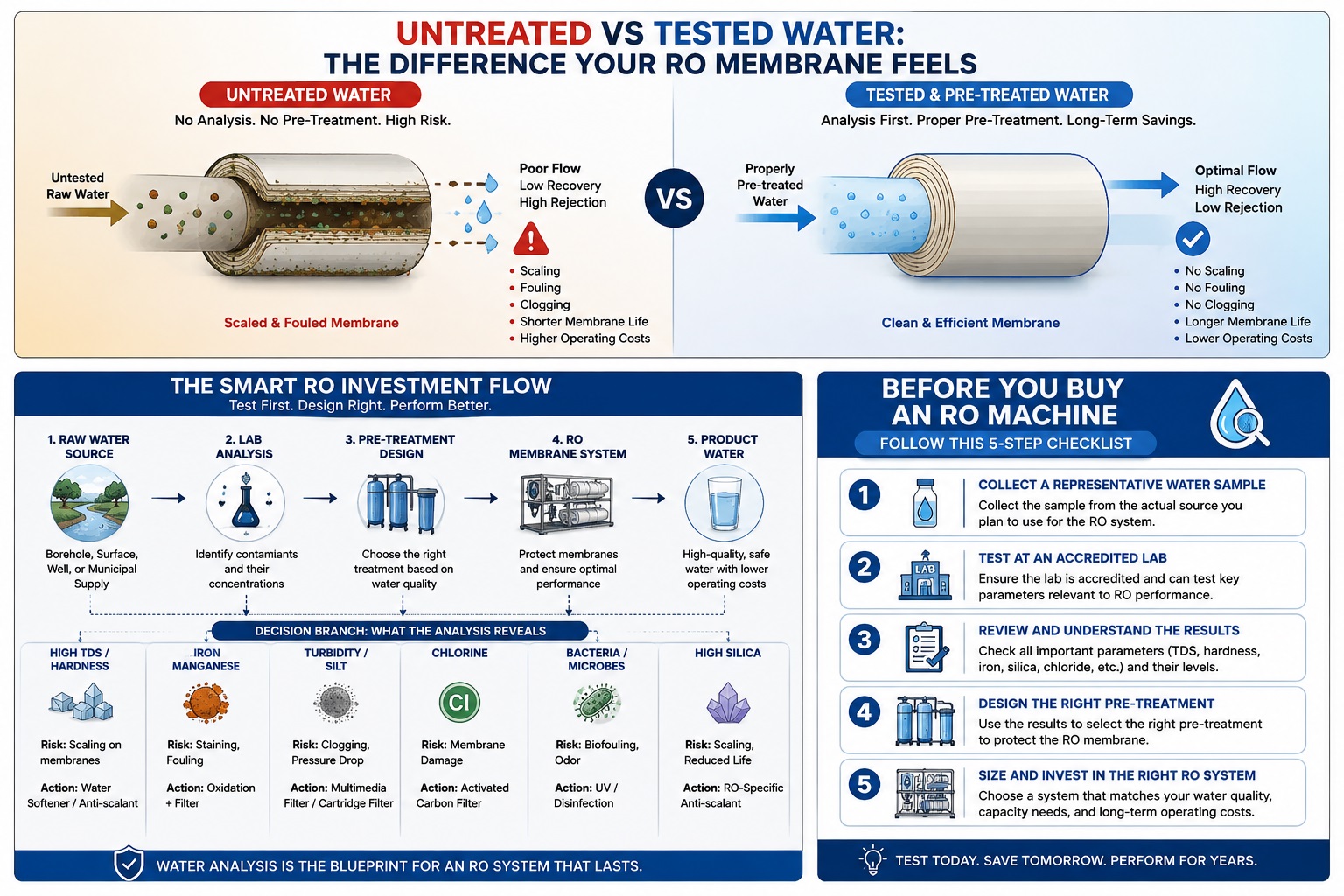
Before you choose any RO system, you must understand what is in your source water. The system’s design—including membrane type, pre-treatment requirements, and capacity—depends entirely on your feed water composition.
Test Your Water First
At a minimum, you need to know:
- Total Dissolved Solids (TDS): The total concentration of dissolved substances, including salts, minerals, and metals
- Hardness: Calcium and magnesium levels that cause scaling on pipes and appliances
- pH level: Should ideally be between 6.5 and 8.5 for potable water
- Iron and manganese: Common in Kenyan boreholes; cause staining and membrane fouling
- Fluoride: Naturally occurring in many Kenyan counties; can exceed safe limits
- Biological contaminants: Bacteria, coliforms, and other pathogens
You can conduct a basic TDS test using a handheld meter, but comprehensive testing—including heavy metals, fluoride, and bacteriological analysis—requires certified laboratory analysis to confirm compliance with WHO and KEBS drinking water standards.
Matching System to TDS
| Feed Water TDS | Recommended System Type | Why |
| Below 100 ppm | Basic filtration + UV | RO may be unnecessary |
| 100–300 ppm | Low Hardness-Low Saline RO | Optimized efficiency; lower energy costs |
| 300–1,000 ppm | Standard brackish water RO | Higher pressure membranes required |
| Above 1,000 ppm | High-pressure brackish or seawater RO | Specialized membranes; higher energy consumption |
The high-pressure high hardness-high saline Reverse Osmosis Machine is specifically designed for water with TDS levels from 2,000 ppm to 15,000+ ppm, making it ideal for highland boreholes and municipal supplies in Kenya.
Step 2: Determine Your Required Capacity
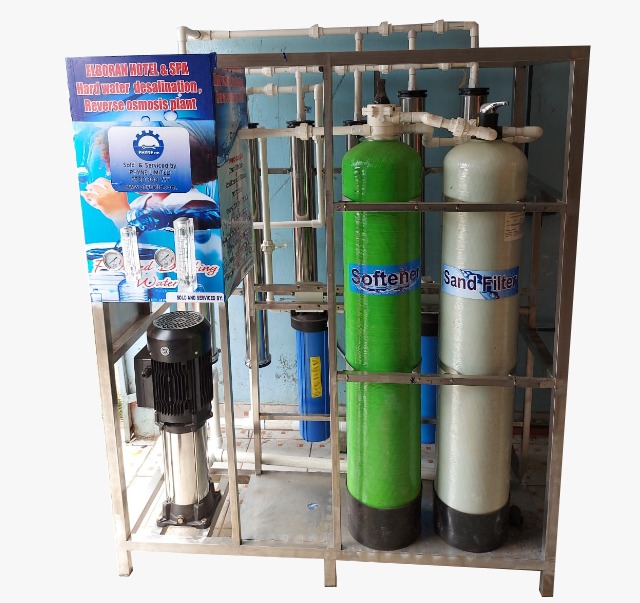 Undersizing is the most common and costly mistake in RO system selection. An undersized system runs at maximum capacity continuously, accelerating membrane fouling, increasing energy consumption, and shortening component life.
How to Calculate Your Capacity Needs
- Step 1: Determine your peak daily water demand
Calculate your total daily water consumption in liters. Include all uses: drinking, cooking, cleaning, production, irrigation, and any other applications. - Step 2: Add a safety factor
Industry best practice recommends adding 20–30% overcapacity to handle peak demand and filter degradation over time. - Step 3: Convert to hourly capacity
Divide your total daily requirement (with safety factor) by the number of operating hours per day.
Capacity Guide by Application
| Capacity | Best For |
| 250 L/h | Small commercial applications, large households, small restaurants, offices |
| 500 L/h | Growing businesses, medium-scale operations, schools, small hotels |
| 1000 L/h | Water bottling plants, large institutions, hospitals, large hotels |
| 2000 L/h | Heavy-duty, continuous high-volume production, large bottling plants |
Our RO Machines are available in different capacities: 250 L/h at KSh 230,000, 500 L/h at KSh 330,000, 1000 L/h at KSh 600,000, and 2000 L/h at KSh 1,000,000.
Step 3: Understand Treatment Stages
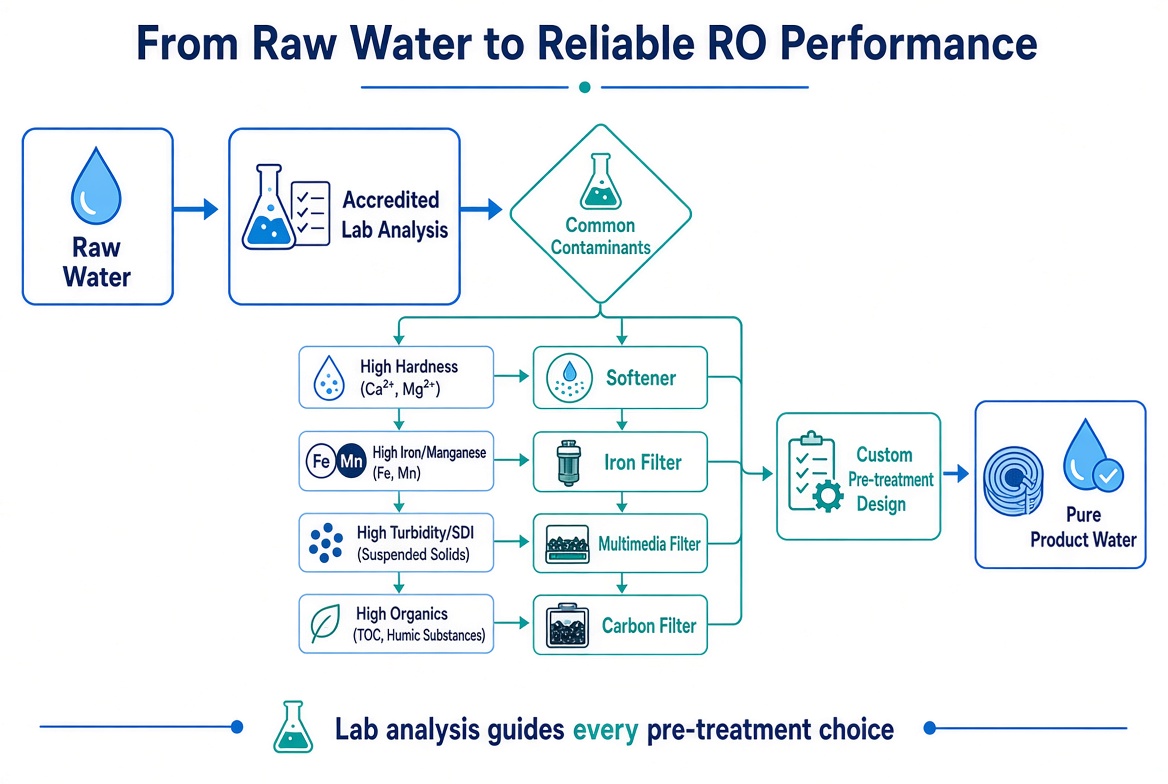
Not all RO systems are created equal. The number and type of treatment stages determine what contaminants are removed and how long the system lasts.
Essential Stages for Kenyan Water
A robust commercial RO system for Kenyan conditions should include:
| Stage | Purpose | Why It Matters in Kenya |
| Sediment filtration | Removes sand, silt, and suspended particles | Kenyan boreholes often carry sediment |
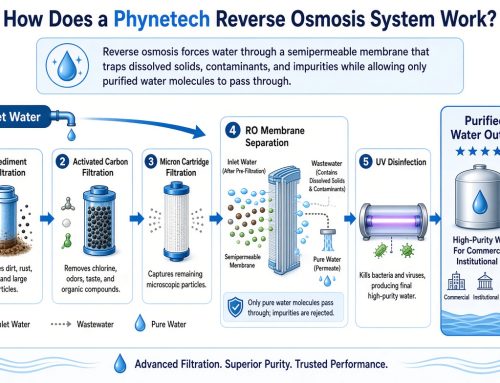
| Activated carbon | Removes chlorine, odors, and chemical residues | Protects the RO membrane from chlorine damage |
| Micron cartridge | Fine particle filtration | Protects the sensitive RO membrane |
| RO membrane | Removes dissolved solids, salts, and heavy metals | The core purification stage |
| UV disinfection | Eliminates bacteria, viruses, and pathogens | Essential for biological safety |
Optional Pre-Treatment
Depending on your water quality, additional pre-treatment may be necessary:
- Chlorine dosing: For biological control in high-risk water sources
- Antiscalant injection: Prevents mineral scaling on the membrane
- pH adjustment: Optimizes membrane performance and prevents corrosion
Step 4: Check Certification and Compliance
In Kenya, water quality is regulated by the Kenya Bureau of Standards (KEBS) and the National Environment Management Authority (NEMA).
KEBS Drinking Water Standards
KEBS sets standards for drinking water under KS 459-1:2007, specifying limits for:
| Parameter | KEBS Requirement |
| Total Coliforms and E. coli | Must be zero |
| pH Levels | 6.5–8.5 |
| TDS | Must comply with KEBS limits |
| Fluoride | Maximum 1.5 mg/L |
| Heavy Metals | Within specified limits |
For bottled water, KEBS requires compliance with KS EAS 153 (Packaged Drinking Water) or KS EAS 13 (Natural/Mineral Water). Treated water for bottling must have a TDS content not exceeding 10 mg/L.
Why KEBS Certification Matters
When you purchase a KEBS-certified system, you are getting equipment that has been tested and approved for performance and safety in the Kenyan market. Non-compliance can result in legal penalties exceeding KES 2 million per violation, facility closures, or license revocations.
Step 5: Consider Installation and After-Sales Support
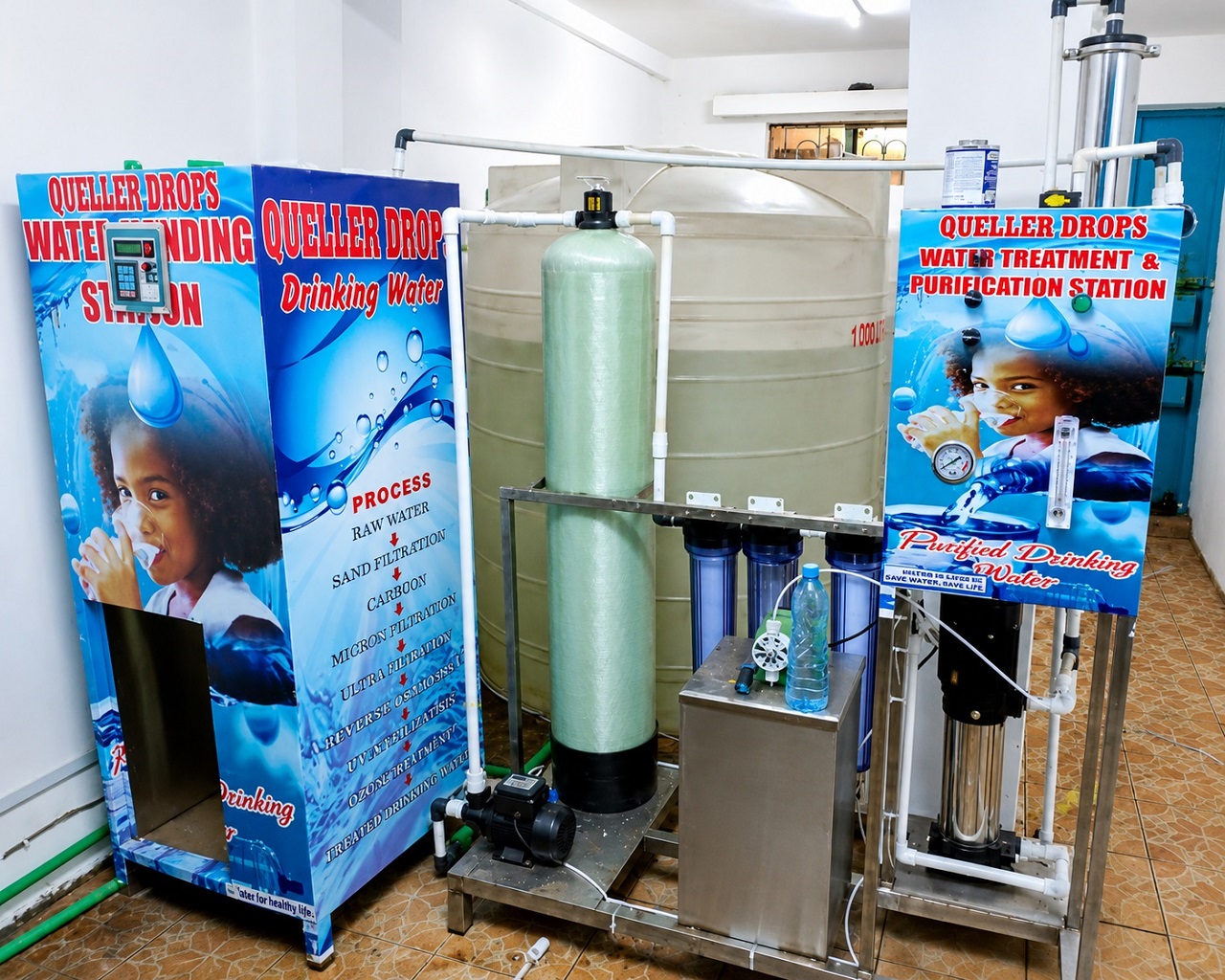 A commercial RO system is not a “set and forget” purchase. Installation quality and ongoing support directly affect system performance and lifespan.
Installation Considerations
- Professional installation: Improper installation can damage components and void warranties
- Site preparation: Ensure adequate space, power supply, and drainage
- Water source connection: Proper plumbing to feed water and discharge points
The RO Machine includes free installation and commissioning where applicable.
After-Sales Support
Look for a supplier who offers:
- Warranty: At least one year on major components
- Genuine parts availability: For filters, membranes, and UV lamps
- Technical support: For troubleshooting and maintenance guidance
- Service contracts: Regular maintenance to prevent breakdowns
Phynetech offers a full year of warranty and maintains a ready stock of genuine parts.
Step 6: Factor in Maintenance Requirements
Every RO system requires regular maintenance. Understanding these requirements before purchase prevents surprises and budget overruns.
Typical Maintenance Schedule
| Component | Replacement Frequency |
| Sediment/Carbon pre-filters | Every 3–6 months |
| Micron cartridge filters | Every 3–6 months |
| RO membrane | Every 2–5 years (depends on water quality and usage) |
| UV lamp | Annually |
| Media backwashing | Regular (depends on feed water quality) |
Hidden Maintenance Costs
- Chemical consumption: Antiscalants, chlorine, and pH adjustment chemicals
- Energy costs: Pump electricity consumption
- Water costs: The concentrate (waste) stream typically represents 25–40% of feed water
Step 7: Calculate Total Cost of Ownership
The purchase price is only part of the equation. A cheaper system with higher operating costs may cost more over its lifetime than a higher-quality system with lower ongoing expenses.
Cost Components to Consider
| Cost Category | What to Evaluate |
| Initial purchase | System price, delivery, installation |
| Energy | Pump power consumption over system life |
| Water | Cost of feed water lost to concentrate stream |
| Chemicals | Pre-treatment chemical costs |
| Filters and membranes | Replacement frequency and cost |
| Maintenance labor | Technician visits and service contracts |
| Downtime | Cost of system outages and lost production |
Common Mistakes to Avoid
- Choosing Based on Price Alone- The cheapest system is rarely the best value. Consider total cost of ownership, not just purchase price.
- Undersizing the System- An undersized system runs continuously, wears out faster, and may fail to meet peak demand.
- Skipping Water Testing- Installing an RO system without knowing your feed water TDS is like buying shoes without knowing your size. The system may be completely wrong for your water.
- Ignoring Pre-Treatment- Poor pre-treatment is the leading cause of premature membrane failure. Skimping on pre-filters costs more in membrane replacements.
- Forgetting About After-Sales Support- A system is only as good as the support behind it. Choose a supplier who can provide parts, service, and technical expertise.
Frequently Asked Questions About Commercial RO Systems
- What size RO system do I need?
Calculate your peak daily water demand, add a 20–30% safety factor, and divide by your daily operating hours. Available capacities include 250 L/h, 500 L/h, 1000 L/h, and 2000 L/h. - How much does a commercial RO system cost in Kenya?
The Phynetech RO Machines ranges from KSh 230,000 for 250 L/h to KSh 1,000,000 for 2000 L/h. Prices vary by capacity, features, and pre-treatment requirements. - Is KEBS certification important?
KEBS certification ensures the system meets verified performance and safety standards for the Kenyan market. Non-compliance can result in significant penalties. - How do I test my borehole water?
Basic TDS can be tested with a handheld meter. Comprehensive testing for heavy metals, fluoride, and bacteria requires certified laboratory analysis. - What is the ideal TDS range for the Low Hardness-Low Saline RO Machine?
The system is optimized for feed water with TDS between 100 ppm and 300 ppm. - What is the ideal TDS range for the How Hardness-How Saline RO Machine?
The system is optimized for feed water with TDS between 2,000 ppm to 15,000+ ppm. - How often do RO membranes need replacement?
Under proper operating conditions, commercial RO membranes typically last 2–5 years. Regular pre-filter changes extend membrane life. - Does the system include UV disinfection?
The Low Hardness-Low Saline RO Machine includes integrated UV disinfection to eliminate bacteria, viruses, and other pathogens. - Can I use this system for a water bottling business?
The 1000 L/h and 2000 L/h models are suitable for water bottling operations, provided the system is properly configured and KEBS-certified.
Commercial RO System Buying Guide – Conclusion
Choosing the right commercial RO system in Kenya requires a systematic approach: test your water, calculate your capacity needs, verify certification, and evaluate total cost of ownership. The Low Hardness-Low Saline Reverse Osmosis Machine—engineered specifically for 100–300 ppm TDS water and available in capacities from 250 L/h to 2000 L/h—offers a purpose-built solution for highland boreholes, municipal supplies, and commercial applications across Kenya.
With KEBS certification, a one-year warranty, and countrywide delivery and installation support, it represents a reliable investment in long-term water quality.
Explore the Phynetech Commercial Reverse Osmosis Machines
If you are ready to choose a commercial RO system for your borehole, business, or institution, explore the full specifications, capacities, and pricing of the Phynetech Commercial Reverse Osmosis Machines.
For inquiries or to arrange water testing:
- Phone/WhatsApp: +254 720 900 777 | 0717 777 112
- Email: phynetech@gmail.com
- Location: Ruiru Exit 11, Eastern Bypass, Kihunguro, Thika Road, Kenya
Need help calculating your capacity requirements? Read our guide on What Size RO System Do I Need? or contact Phynetech for a personalized consultation.

Discussion
Testimonials
"Talk of quality products Phynetech limited got u covered.Thanks for always being the best and not forgetting the customer service"
Becky Gichimu
Related Post
For more related Blog posts from Phynetech Limited Kenya